
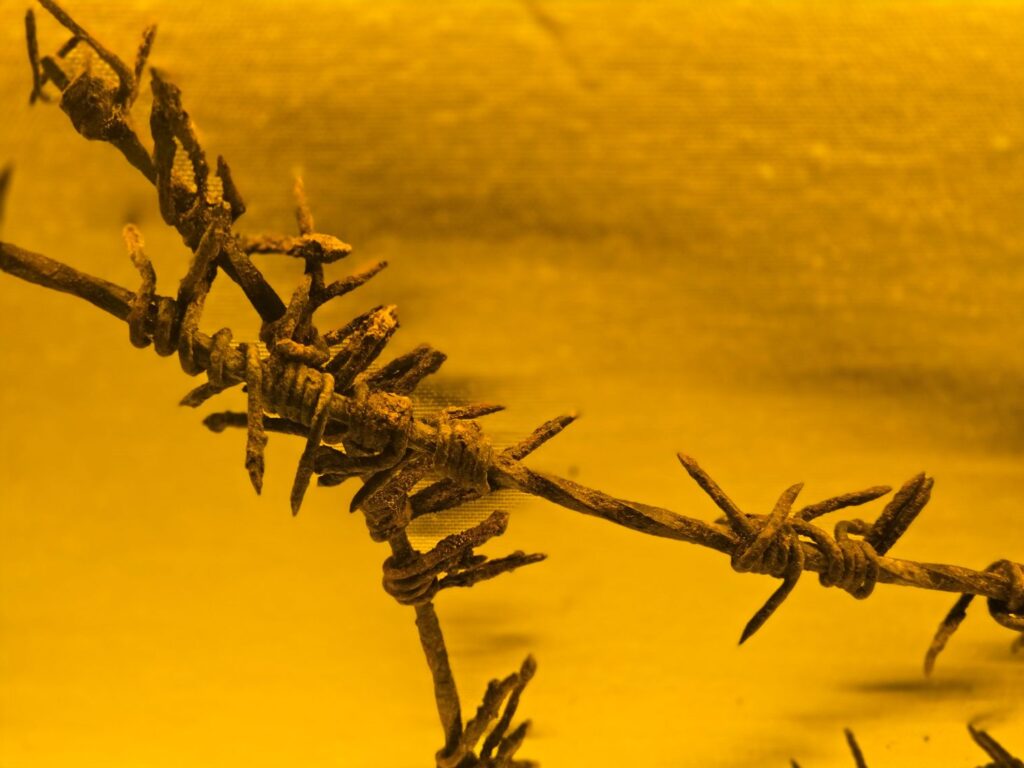
P. Ferguson image, September 2025.
Epigraph
The wound is where the light enters you.
Rumi (1207-1273)
P. Ferguson image, September 2025.
Day Seven (21 September): Kumkale and Troy
Suitably post-breakfast fortified at our morning café, our troop embarks upon the tour’s mini-bus with its arrival off the Ecabat ferry. Today a new destination, remaining on the Anatolian to Kumkale where the Ottomans and French met in conflict 25-27 April 1915. The afternoon a return to the familiar – Troy where new spaces provide these eyes a fortuitous chance encounter; a symbolic representation of my ever-present thoughts of conflict.
P. Ferguson image, September 2025.
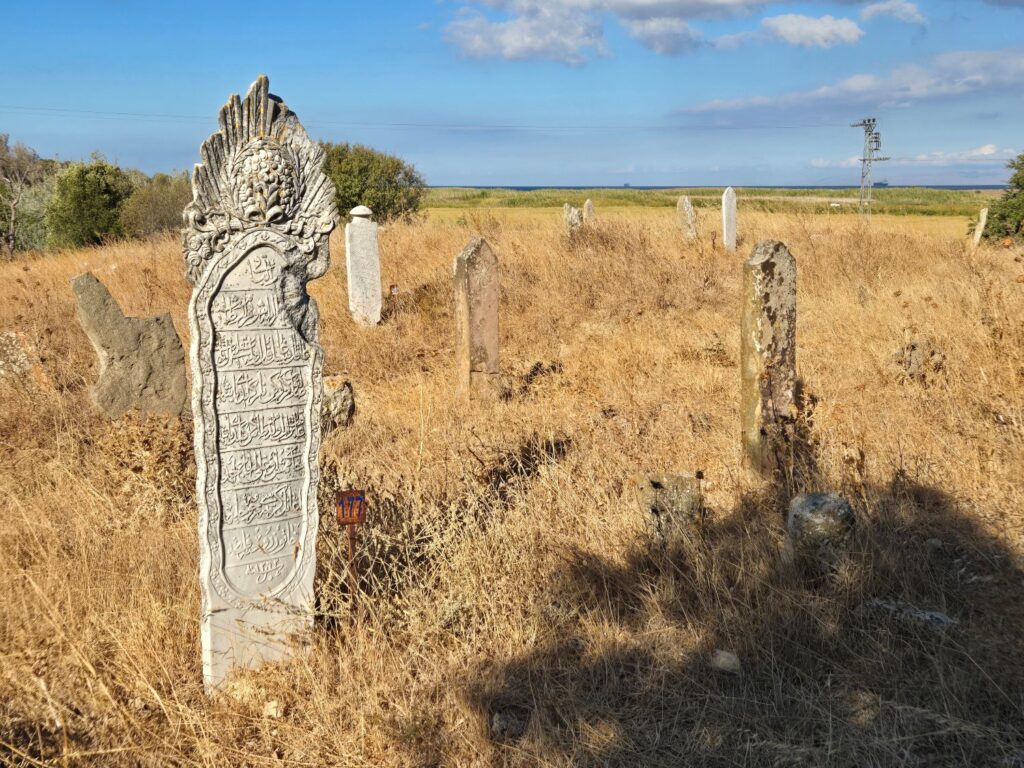
Our wheels roll through areas of wildfire fresh in its destructive path. Blackness against dry ground, buildings and surviving shrubbery. I yearn again for a footed wander across these vistas to seek new views. But soon a return to the troop as the notes of our tour’s anthem begin to play. The bus slows. We have arrived at the Ottoman cemetery where the 1915 French diversion is explained. Again, not all goes well for the allies. Peter repeats the objectives of the first three days…day one Achi Baba, day two, oh dear my recall faded but with inquisition Sari Bahr and day three tea and tarts in Constantinople. None of these objectives achieved.
P. Ferguson image, September 2025.
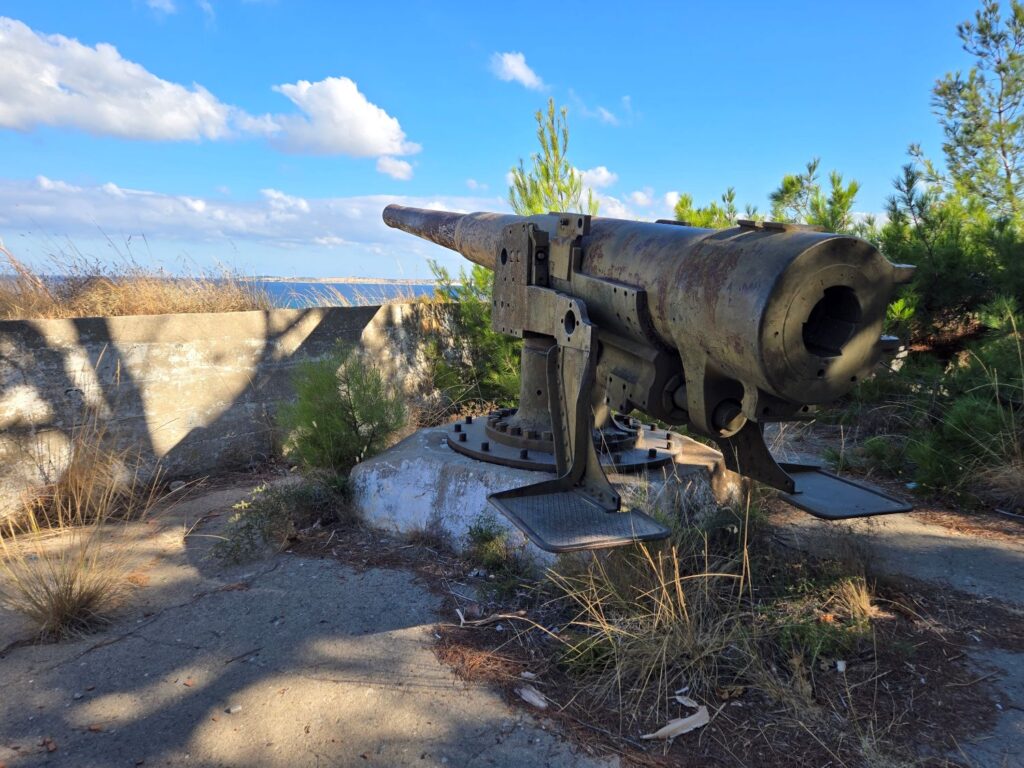
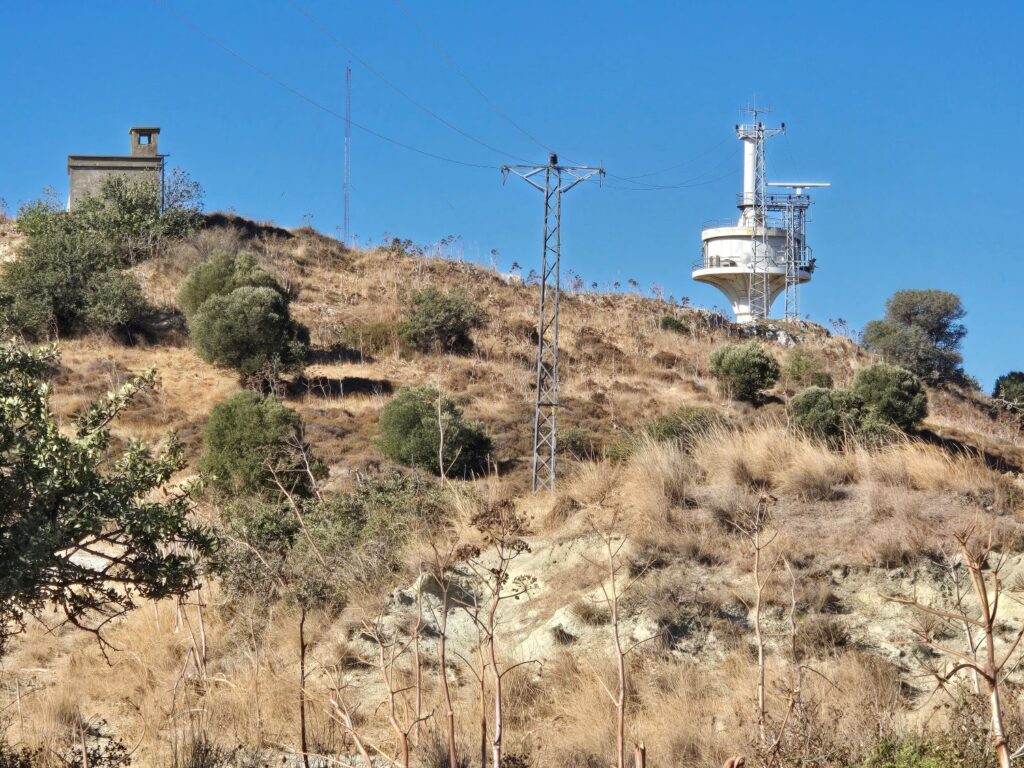
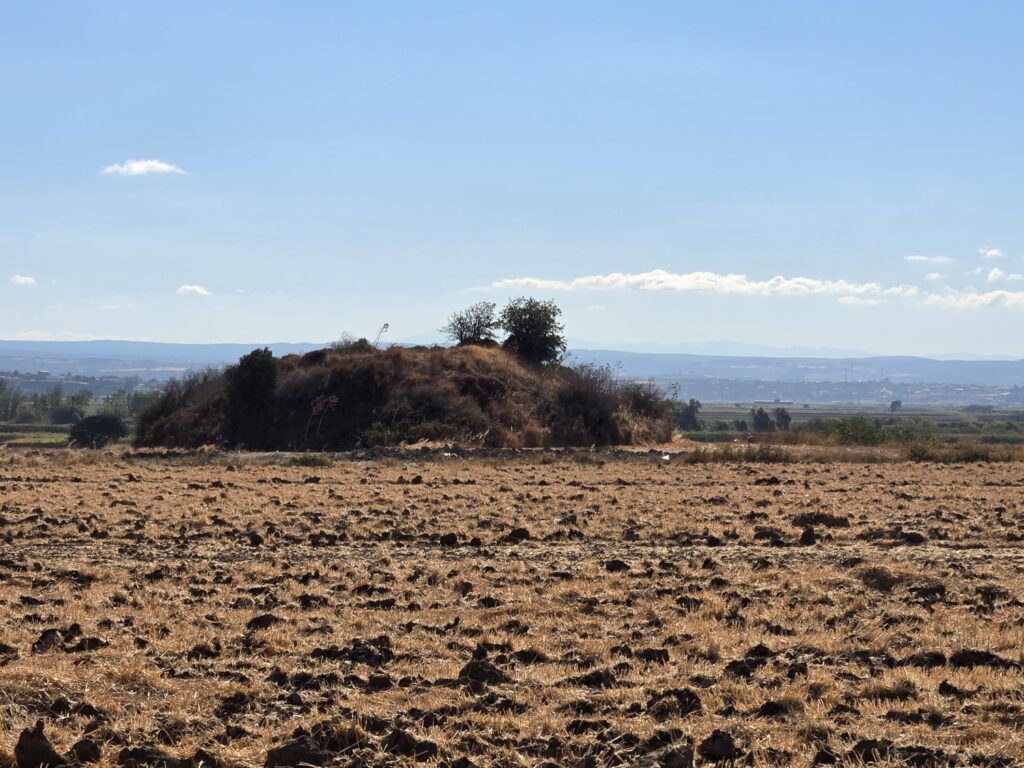
Afterwards we walk stone cobbles towards Achilles. The wind howls through the trees as we proceed to gun batteries. Originals and props for film reside here as does a radio direction finder ideal as a potential set for a 007 antagonist’s lair. We continue to walk. After watching from afar we catch up with the others – we stand, as Alexander the Great once did, at Beşiktepe before a bronze age burial mound, a tumulus where Achilles is said to be buried (c. 1184 BCE). Others make the ascent, but I am content to stand at its base, the angle too steep to climb. That we too pilgrims travel for events of the Great War, Alexander ventured here 334 BCE (Before Common Era).
P. Ferguson image, September 2025.
At Troy we wander the wood trackways stopping at each excavation panel. The archaeological record that is Troy is a must see – for those with strong interests in this site, this is a lifetime destination. Our walkabout ends with the ubiquitous gift shop visit where patinated owls with golden highlights call from glass cabinets. None come home this day.

P. Ferguson image, September 2025.
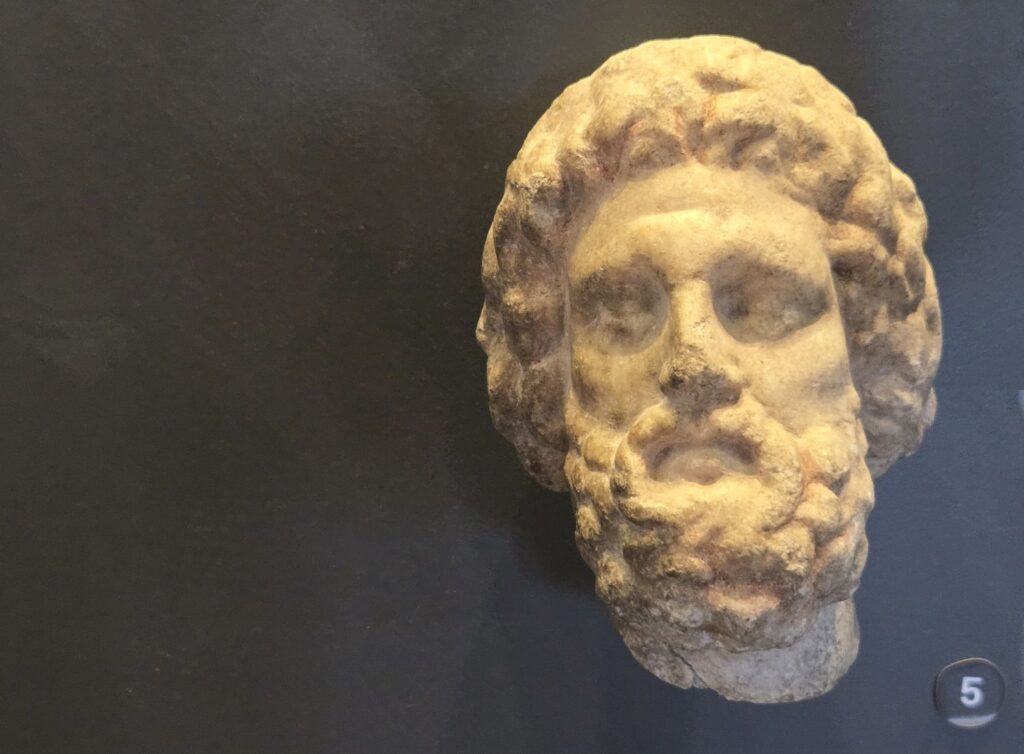
It is at the new museum (Troya Müzesi), Tevfikiye, Turkey opened in October 2018 that I find the epigraph to our journey here. Amidst the broken and whole pieces that once were Troya – one fragment, one face – Asklepios (God of Healing). I remember to myself (we should all remember) not all wounds are visible. As I look upon the face of Asklepios (son of Apollo – God of Light) I appreciate we can all use healing. We can all use the light.
P. Ferguson image, September 2025.
From notes written 21 September 2025
—SNIP—