Fragments of Memory
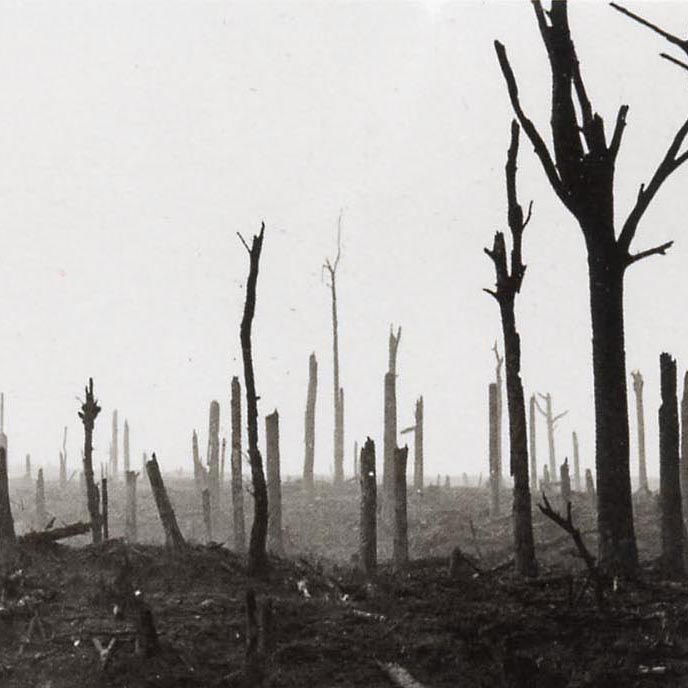
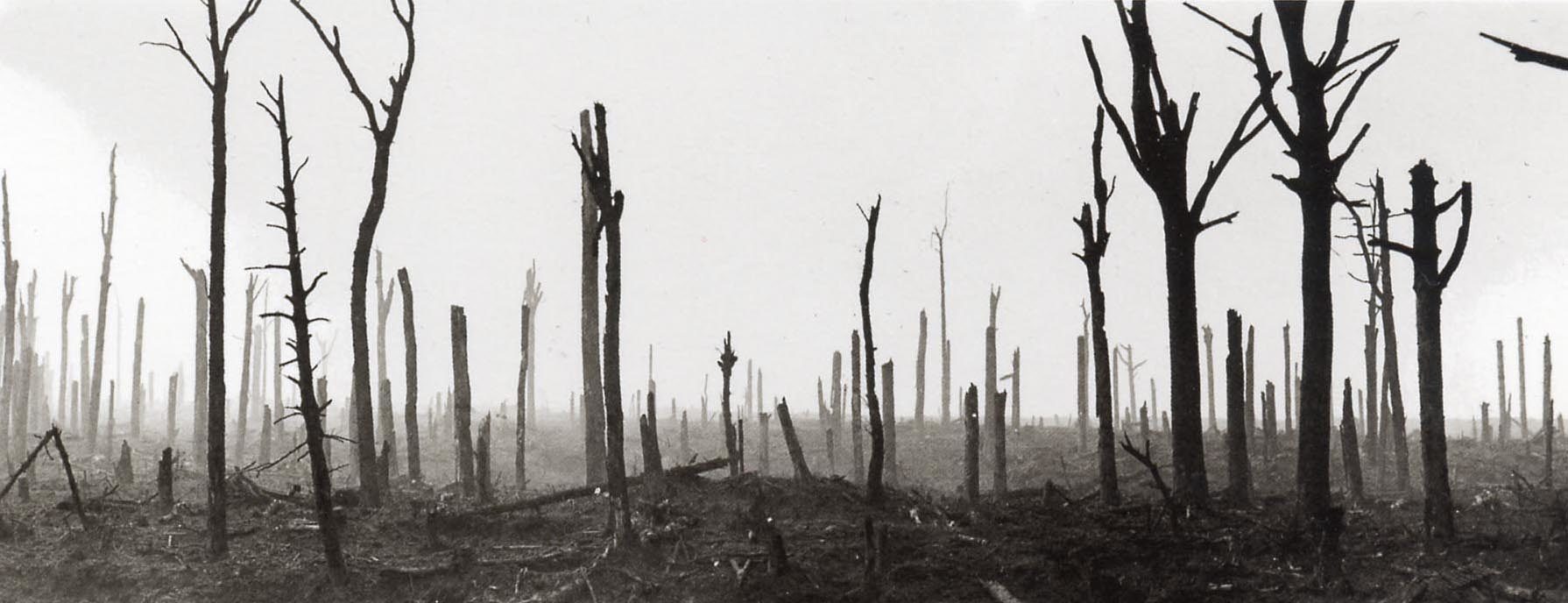
Like inverted stakes in the hearts of France and Flanders, the splintered trees from the fields of battle stand as rooted silhouettes. Their splinters litter the ground on which men once walked, crawled or ran; the belligerent skelfs, large and small, hurling about tearing and ripping the flesh, piercing the souls of men. Amongst the metal fragments, aimed engineering, gas and shrapnel balls these organic shards of nature took their toll. They, the soldiers, from all the pictures – seem to live in a world of black and white, with gray washes suggesting a continual haze from which men emerge between the trunks. The colour gone, leached from the landscape, drained into the ground where the roots of seemingly dead trees struggle to find a source of regeneration.
And yet with peace, and the passage of time, this bleak terrain that harnessed all participants for the years of the Great War has returned as green fields filled with new life. The shattered remains of Ents, witnesses to the dreary course of men have passed but like the bones of men, their fragments haunt the ground in search of sweet memories instead of the bitterness of war.
Splinters, bits of whole things, fragments of memory, much of it lost to us, but once in a while, captured in a note to mother or another loved one, in the rekindling of the past, or in the telling of a story that has survived. When Tolkien wrote his trilogy, there are reminders of the Great War woven throughout its pages, his time on the Somme, and the acts of men are there for all of us to become immersed. How few today realize that Tolkien’s epic reflects, his Great War, the age of men.
Did you know?
John Ronald Reuel Tolkien served during the Great War with the 11th Battalion Lancashire Fusiliers. He arrived in France in June 1916 and during the Battle of the Somme was a signals officer. Tolkien saw action at the Battle of Thiepval Ridge and took part in the assault on Schwaben Redoubt. Having suffered from trench foot on numerous occasions he developed trench fever in late October 1916 and returned to England November 8, 1916. The rest of his war was spent on garrison duties and in hospital. Still Tolkien’s experiences on the Somme gave to the world, through the sites he was witness, a trilogy long regarded as epic and classic in nature. Best then to remember his words, “By 1918 all but one of my close friends were dead.”
Previously published Pipes of War website, 29 April 2012