Passing the Restored Menin Gate

Poppy cross at Menin Gate
Visitor’s poppy cross at the Menin Gate.
P. Ferguson image, March 2026.

…and so I have an idea…

My time here is filled, with each step, a scanning of perspectives – to think…I wander across landscapes I have travelled before either with bicycle or car. Walking…walking…brings new impressions and sentiments…I learn about distance and roads (paths too) less travelled. I find routes once taken via the long path to be traversed in half the time by my desire (and inclination) not to travel the same way twice.

These walks…my walks, perhaps of pilgrimage (perhaps salvation) have totalled 26.5 hours on foot. True there is time to stop, to write in my leather bound journal. Otherwise it is the next step…the next row…the next landscape. My bearings are kept by…Kemmel to the south…Ieper’s towers of to the north. With these beacons I am able to position myself within the Salient. Without either in site, my red and black acrylic compass tells me in which direction to travel.

Remembrance at Menin Gate.
Wreaths and lone poppy…they have been.
P. Ferguson image, March 2026.

Walk Summary…

  • 28 March (Saturday) Bedford House (4.5 hours).
  • 29 March (Sunday) Voormezelle, Elzenwalle, Ridgewood (6 hours).
  • 31 March (Tuesday) Duhallow ADS, Essex Farm (4.5 hours).
  • 2 April (Thursday) Railway Chateau, Divisional Cemetery, Belgian Battery Corner (4 hours).
  • 4 April (Saturday) Railway Dugouts (Transport Farm), Blauwepoort Farm, Zillebeke Churchyard, Hill 60, Larch Wood (Railway Cutting), Maple Copse (7.5 hours).

But so too on these perspectives I question what may be too much of “more of the same”. Many of the images I take are for reference, future study. I feel as yet I may be failing to capture the heart, the soul of a site in a unique way. And for today, a day of rest after all the time on the road yesterday I routinely think upon the Menin Gate…of Sassoon’s poem On Passing the Menin Gate…In the apartment I read and reread Sassoon’s lines…Paid with a pile of peace-complacent stoneRise and deride this sepulchre of crime.

UNESCO Site
Detail from UNESCO panel.
P. Ferguson image, March 2026.

Not to pillory the words of poets, both Sassoon and Owen (and others) had their time in the trenches and both were recipients of the Military Cross…I think…I do not stumble. How can Sassoon’s words influence my picture choice for a Menin Gate gallery?…and so I think. Do not use the gate…use words…of those who come to visit…Within this idea, a walk (on a day of rest) back to the Menin Gate…where Flemish text …special thanks to Feline (surname redacted)*…has given me this day and I have found words from others for the gallery.
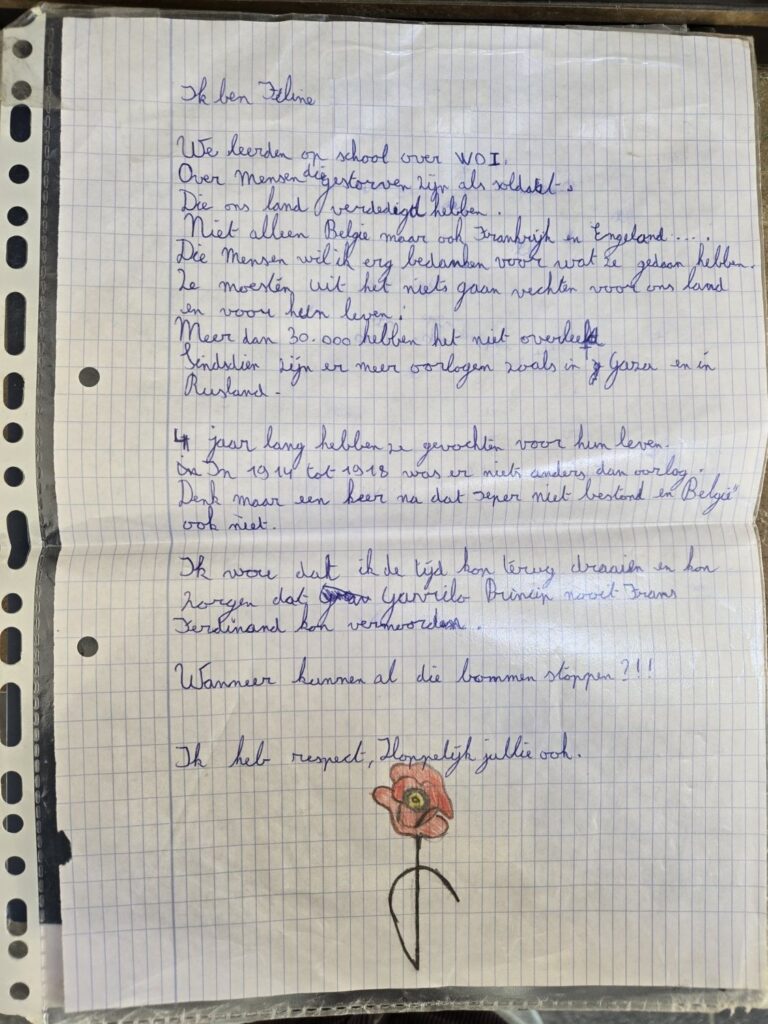
Words from Feline
Feline’s words for all to read at Menin Gate.
P. Ferguson image, April 2026.

I am Feline….**

We learned at school about WWI.

About people who died as soldiers.

Who helped defend our country.

Not only Belgium, but also France and England…

I would really like to thank those people for what they have done.

They had to go fight for nothing, for our country and for their lives.

More than 30,000 did not survive.

Since then there have been more wars, such as in Gaza and in Russia.

For 4 years they fought for their lives.

From 1914 to 1918 there was nothing but war.

Just imagine that this never ended and Belgium and Ypres didn’t exist either.

I wish I could turn back time and make sure that Gavrilo Princip never shot Franz Ferdinand.

When will all those bombs stop?!

I have respect. Hopefully you do too.

Citation for the award of the Military Cross (London Gazette 27 July 1916)

2nd Lieutenant Siegfried Loraine Sassoon
3rd attached 1st Battalion, Royal Welsh Fusiliers

For conspicuous gallantry during a raid on the enemy’s trenches. He remained for 1½ hours under rifle and bomb fire collecting and bringing in our wounded. Owing to his courage and determination all the killed and wounded were brought in.

Citation for the award of the Military Cross (London Gazette 30 July 1919)

2nd Lieutenant Wilfred Salter Owen

5th attached 2nd Battalion Manchester Regiment

For conspicuous gallantry and devotion to duty in the attack on the Fonsomme Line on October 1st/2nd, 1918. On the company commander becoming a casualty, he assumed command and showed fine leadership and resisted a heavy counter-attack. He personally manipulated a captured enemy machine gun from an isolated position and inflicted considerable losses on the enemy. Throughout he behaved most gallantly.

*Feline…your voice has spoken. In gratitude…with respect…
**Translation by Elodie Delplace, Main Street Hotel, Ieper. Thank you Elodie.

Finding My Way

Bedford House Cemetery Letting.
The incised lettering at the entrance to Bedford House Cemetery.
P. Ferguson image, March 2026.

To Bedford House

It has taken a few days. Rosemary has returned to Canada and the local weather has not been conducive to any long wanderings. After two days I take the chance and begin with a short distance venture (1.6 to 2.5 km). It is a four hour wander, a visit with coffee and cats at Zuid-Bellegoed where in August 2018 Rosemary and I shared in similar cats, coffee and ice cream. It is part of myself becoming part of the landscape…not all doing…some relaxing as various kittens of adult size share the sun’s warmth from their window side perches. I like the way the cats gently close their eyes…I can learn something from their days of rest.

Calico cat.
Calico cat rests gently at their window.
P. Ferguson image, March 2026.

I have cycled this path before but today, Saturday 28 March 2026, I follow my feet instead of rotating wheels. There is more to see as I can pause easily. I enter Bedford House Cemetery, where 5,139 Commonwealth soldiers are buried. And this…but one of more than 250 cemeteries in Flanders row on row. The day marks the first time I carry my leather-bound journal with me, to record my thoughts in the moment. The journal is part of a larger imagination I have…a possibility for the future created from an earlier story 100 years prior to 1918.

Leatherbound journal.
Leatherbound journal travels on this visitor’s treks.
P. Ferguson image, March 2026.

So too I have seen something similar in the Displaced exhibition created by the In Flanders Fields Museum. A poetry book…from which I create more notes based on what I see…threads always come together…not a weaving…perhaps an embroidery or tapestry. There may be better words for this but this is the limit of my textilian (new word!) imagination today.

Poetry book.
Poetry book with watercolours at the Displaced exhibition, Ieper.
P. Ferguson image, March 2026.

Silence…only silence…though I will share my time here, later, with a father and son who have come here to walk this way. They find time for play…the father recognizing where they are but junior happy in the innocence of his small pedal bike. Father will remember this day, for junior perhaps an impression has been created. I believe they will walk and play here again. Row on row I walk.
T.S.H. Peaceful
…Private Peaceful…an impression has been created.
P. Ferguson image, March 2026.

My search here are commemorations from visitors and what they have chosen to leave with the fallen. Poppies, figures, flags, poppy crosses, pictures, and notes. I capture these with the shutter. With today’s writing I search for descriptions of the two domed architectural features and find them described as circular Classical temples…so too a description of the cemetery itself, irregular and rambling in its layout. This suits me greatly for my start of walks and writing. I sit within the Temple and write. Fountain pen in hand, pencil nearby for sketching. Another couple walks through, some rows away, and with their mobile take some pictures. I move to the other Temple directly opposite.

Temple and Indian soldier's grave marker.
Temple with Indian soldier’s grave marker.
P. Ferguson image, March 2026.

With my decision to return to my Ieper temporary home, I start for the entrance/exit but find interest in the empty benches and flowers that attract the most enormous of bumblebees. I discover that bumbles are suffering in Belgium due to habitat loss and climate change. The Commonwealth War Graves Commission (CWGC) has been busy providing for species; insect homes and bird houses appearing at their sites. So too I become most interested that Belgium is a leader in rearing commercial bumblebees for pollination. Credit to the CWGC for their values to becoming environmentally friendly, to increase biodiversity and working towards sustainability. Indeed I have noticed the change.

Bumblebee at Bedford House.
Time for nature…towards sustainability. A Bumble dances their magic.
P. Ferguson image, March 2026.

Benches have always been of comfort to me, not only for my ability to rest upon them and observe, but as a photo study of their meaning alone in a landscape. The benches beckon comfort, for a visitor to join them in their watchful gaze. I find time to enjoy their horizontal and vertical slats from which I take in the views. With birdsong in my steps I move again towards the entrance/exit and reread the introductory text provided.

Bench at Bedford.
A bench watches over the fallen as if calling for visitors to reflect.
P. Ferguson image, March 2026.

Notes about the chateau once here sends me back to the ruins (and moat), the ruins taped off but viewable. Chateau Rosendal, renamed by the British as Bedford House was used as a headquarters and hospital, but was never captured. The impact of shell fire destroyed the chateau and trees and on one single day some 500 gas shells fell here.

Chateau Rosendal.
Chateau Rosendal image.
Passchendaele Memorial Museum.

I leave now…seemingly (once again) wondering when the thread, the impetus for writing will come? I have my notes, my journal, my pictures. Early Monday morning I see the video of the reborn Rush at the 29 March 2026 Juno awards. With drummer Anika Nilles and keyboardist Loren Gold I am thrilled for Rush to return to the stage. Their music means much to me, providing the desire to play guitar…(how many time have I played Working Man?…and others…) The song they chose for their return…Finding My Way from their first album released in 1974…

For the future. caring for the fallen sign.
Providing care for the past and the future.
P. Ferguson image, March 2026.

Though the lyrics of Finding My Way are pre-lyricist and drummer Neil Peart (The Professor) Rush’s return after last performing 1 August 2015 are heartfelt. The loss of Neil Peart in 2020 to Alex and Geddy, and to all those close to the drummer was…before his time. Would Rush ever play again? And so they did – as so too I walk these rows of trauma, before their time, finding my way, finding my way back home

Thanks to Geddy, Alex, John, Neil, Anika, Loren and 5,139 others this day.

Trauma does not heal. However, post-traumatic growth can allow us to build resilience. Through the footsteps of others…I find healing…my sustainability…find your way.

Right Thread for the Madonna

Rosemary at St. Martin's
Rosemary pauses at St. Martin’s Cathedral, Ieper.
P. Ferguson image, March 2026.

Compassion and Grace

We walk through the cobbled streets and paths of Ieper and Rosemary asks, “What will you write about Bruges (Brugge)?” It has been two days and no scratching upon a notepad has followed since our wonderful wander with new friend Roel. As we walk I simply say, “There are not enough threads to connect yet”.

There can be no doubt that The Madonna of Bruges was a distinct highlight. I had wanted to see the carved marble figure of the Madonna and child since learning about the statue on an airplane in December 2014. I know this date well as I watched The Monuments Men, released 2014, on the tiny back of a chair screen on my way to London.

Photographer at Bruges.
A visitor to Bruges finds grace amidst the blossoms.
P. Ferguson image, March 2026.

The film was not my first introduction to stolen art of the Second World War. Visits to museums, art history books and other resources had informed me, but The Monuments Men film with its Christmas timing and being relevant to my then current search for faith in humanity was timely. So too the film Woman in Gold (2015), and similarly an earlier film with Peter O’Toole as the psychopathic General Tanz in The Night of the Generals (1967). Tanz suffering a mental breakdown in the Room of Martyrs while viewing paintings of Van Gogh. Within Tanz’s being – the duality of his fine art appreciation tangled within his horrid inhumanity.

Brewery sign.
De Halve Maan brewery sign, a symbol too of compassion.
P. Ferguson image, March 2026.

As we wander the City of Bruges we learn considerably from Roel who has been most gracious in giving his day to our fine adventure. We wander and observe, sit, drink coffee, find ourselves lunch and return to key points of interest. Rosemary is delighted…we are both amused with the 3.2 – 3.3 km (~ 2 miles) beer pipeline of De Halve Maan brewery. Steadily I snap away seemingly always a few feet or more behind.

Church of Our Lady
My destination for the day. The Church of Our Lady in the background.
P. Ferguson image, March 2026.

The day builds to our entry within The Church of Our Lady. We walk slowly, graciously in search not of the Madonna but of other accents, and then, and at the right moment we are upon mother and child. Carved of white Carrara marble by Michelangelo its compassion resounds from within its setting.

Church of Our Lady interior
Within the church…I walk with sensitivity for what we are to see.
P. Ferguson image, March 2026.

There are many people within the church, many pause but I am in need of reflection. More than a pause – I take my time, find time for others, return, view from one side and the other, to the front, to the centre and from various distances. The figure does not have to speak it is perfection to these eyes…a grace upon the earth.

That The Madonna and child has returned not once but twice due to theft astonishes me. I reflect on what the world would have lost if lost to us all. The Madonna of Bruges, once taken by the Nazis 7/8 September 1944; returned by the Monuments Men from an Austrian salt mine in 1945 and previously, in 1794, by Napoleon’s forces, and repatriated in 1815. Still yet, despite this success I cannot help but wonder upon all art works lost to us all and for all time…a deprivation to humankind…more than 30,000 works lost, stolen, destroyed through the processes of hate and want.

Visitors to the Madonna of Bruges.
P. Ferguson image, March 2026.

So this day as we walk from our Ieper apartment to outside the Menin Gate of missing souls, I continue to think on my few words…where are the threads, and yet it will come in the unlikeliest of places, from a speaker box above our bounty..as I step the right words (the right thread) fall upon my ears…

There’s a blaze of light in every word…It doesn’t matter which you heard…The holy or the broken Hallelujah...*

*Hallelujah. Leonard Cohen, 1984.

Woman in window
In Bruges we find grace and compassion…a time of reflection.
P. Ferguson image, March 2026.

Special appreciation to Roel for his time with us and to Rosemary – always by my side.

To Rescue Those in Peril

Coronation Avenue.
Coronation Avenue. Rebuilt after the Blitz.
P. Ferguson image, March 2026.

Stoke Newington High Street Walk

The two pence piece lay atop the coping stone of the 3′ wall at Coronation Avenue. After a number of years I have made my way to this tragic site of the Blitz.

Once and some while ago Rosemary and I purchased tickets for a visit here only to have the train cancelled due to a rail incident. That time it was not meant to be. My return to Liverpool Street Station this day was meant to be. I am able to travel to Stoke Newington on my Oyster card. Once exited from the station I turn left and walk the High Street in anticipation.

Stoke Newington Station
Arrival at Stone Newington Station.
P. Ferguson image, March 2026.

As I move along I search for new and old brick and stone, evidence to 1940-1941…built and rebuilt. The eyes find the shots…the background history to come later…buildings and features, road names, persons until I find the corner destination…the arches of Coronation Avenue.

The architectural lettering of Coronation Avenue and the commemorative plaque indicates the tragedy here. The plaque is well above eye level. During my 30 minute visit I watch as passers by occasionally look towards my interest…my camera indicating there is something to see. No one asks questions…I have my time here.

Coronation Avenue arches.
The arches of Coronation Avenue.
P. Ferguson image, March 2026.

With my return to the station the circular two pence stands out against the grey coping stone. It is copper, weathered from its time here. A lost piece of 1980 somehow becomes a 40th anniversary reckoning with what occurred here. I have had my time…and require no more this day…richer for this experience as I walk I think upon 160+ souls.

Coronation Avenue plaque.
A reminder of the Blitz here at Stoke Newington.
P. Ferguson image, March 2026.

To Rescue Those In Peril

The 13 October 1940 bombing of the Coronation Avenue residential block led to three individuals being recognized with the award of the George Medal. The Air Raid Precautions’ citations summarize case reports recorded in official Civil Defence records. Easthope’s award being reviewed by a non-civil defence committee.

John Cochrane Easthope
Assistant Engineer
Stoke Newington

Mr. Easthope was on duty in the Control Room and hearing that a large number of persons were trapped in a Public Shelter, he volunteered to go to the scene of the incident. He arrived and entered the middle compartment of the shelter through a window at the rear. In spite of the danger of a further collapse of the debris and of the fact that water was then about 4 ft. deep in the shelter, Mr. Easthope worked his way over and under the debris into this compartment in an endeavour to rescue anybody who might be there, but primarily to carry out a reconnaissance to direct the squads who were working above. He found debris blocking the centre compartment up to a distance of 15 ft. from the point of entry. Several persons were were pinned under the wreckage. Mr. Easthope then came out and entered again through the emergency exit into the north compartment and crawled along the top tiers of the bunks in an effort to discover whether any persons were still in that compartment. The water was several feet high and appeared to be rising. Mr. Easthope emerged from the shelter again and reported on the conditions inside.

He then re-entered the shelter and confirmed the position of the debris.

Regardless of the danger of being crushed to death at any instant, or being trapped and drowned, Easthope made four separate visits to the shelter through the hole he had made, fully aware of the risk he was running while searching for trapped people.

Albert James Sambridge
Member, Air Raid Precautions Rescue Party
Hackney

A high explosive bomb struck a building and started fires in the upper floors and breaking water mains. An opening had to be made in the wreckage for members of the squad to enter the basement where water was three feet deep and still rising. A woman was found but could not be moved. The water had by this time risen to five feet and the men were advised to leave. Sambridge, however, continued his efforts to release the victim.

By going under the water, he managed partly to free her. He then had a rope passed down which he tied to himself and the woman. He directed the men above to pull on the rope taking the strain on his own body and by this means the woman was released. The water was by now within two feet of the ceiling but he managed to guide her to the hole through which she was hauled to safety. Owing to the complete darkness and the difficulties in dealing with the casualty, Sambridge was left swimming in the water, which rose to within six inches of the ceiling before he also was rescued on the point of collapse.

Sambridge, in effecting this gallant rescue, showed extreme devotion to duty and total disregard of personal safety.

Edward William Clark
Skilled Member, Air Raid Precautions Rescue Party
Stoke Newington

A H.E. bomb demolished a building . The gas and water mains were fractured and the wreckage caught fire.

People were trapped in the basement which was rapidly flooding . Despite the danger of further collapse of walls and debris, several men of the Rescue Party, among whom was Clark, succeeded in extricating a number of people.

Clark determined to satisfy himself that all had been saved. Again and again he dived into the water under the debris. His perseverance and disregard of danger resulted in him saving a woman who, trapped at the far end of the basement, would certainly have been drowned but for Clark’s gallant efforts.

Having completed his task, Clark collapsed from the effects of exposure and coal gas poisoning.

New Day Rictus Grin

Alabaster bust of Dr. Peter Turner.
The praying bust of Dr. Peter Turner.
P. Ferguson image, March 2026.

St. Olave’s Dr. Peter Turner

My new day begins – though only after the previous evening’s gathering (among friends) – only three hours after landing at Heathrow from Vancouver (8 hour time difference plus hurry up and wait time). Despite the post-flying continuation of time travel – Flight 84 being in motion for 8.5+ hours (A350-1000 aka A35K) 905 km/hour at 35,000 – 40,000’ – I do not actually feel I was in motion – I am only going through the motions. As the Tuesday guest speaker my preparation about some brave souls of the Canadian Expeditionary Force did not fail me…and now…after a modicum of rest it is indeed a new day…known as Wednesday.

Reverend Phillip Dawson
Reverend Phillip Dawson’s kindness exemplified at St. Olave’s. P. Ferguson image, March 2026.

I have looked forward to visiting St. Olave’s (Hart Street), near Tower Hill, for some long while. Despite previous attempts to visit I was unable to make my schedule fit but so much better for this day. This time I was prepared, having dedicated specific time to the visit and in making contact with St. Olave’s prior to my arrival. As a result of pre-planning I looked forward to meeting Reverend Phillip Dawson who was instrumental in bringing this traveller much joy at St. Olave’s church and churchyard. Phillip (and the parish cat Meow), kindly provided much time (and a ladder) during my walkabout.

Phillip and associate with the ladder.
The ladder provided for eye to eye with the returned Dr. Peter Turner.
P. Ferguson image, March 2026.

Having scoured digital maps of the area I planned my zig-zag route from Tower Hill tube station. This was my excitement, in addition to wandering, afterwards, over to Philpot Lane for Two Mice Eating Cheese…and on the return to the station discovering All Hallows was near by. A great surprise as I could have avoided the zig-zag and found my way easily to St. Olave’s (if I’d known). Again it was the walk, my zig-zag route of “soon to see” that added to my first St. Olave’s sighting. I was happy. The segue continues…

Two Mice Eating Cheese
Two Mice Eating Cheese, Philpot Lane, c. 1862.
P. Ferguson image, March 2026.

On my return to Tower Hill station I walk through the hall of the war memorial contemplating names and vessels…there was something more to do here too…I cannot recall – my feet take me to Londinium. With the Tower of London as a backdrop I sit near the Roman wall munching a vegetables lunch while observing visitors to the 1980s bronze Roman statue of Trajan (53-117)…not a great conversationalist but he does have beautiful hands…

Right hand of Trajan.
The hand of Trajan against the blue sky of London.
P. Ferguson image, March 2026.

Meanwhile…

…my real mission and first encounter with St. Olave’s (Hart Street near Seething Lane), built ~1050 following the Battle of London Bridge is its 1658 entrance featuring the ever watchful skull power trio (why does Motörhead come to mind?). Author Charles Dickens referred to both the gate and churchyard as Saint Ghastly Grim. Our skull brethren possibly situated to frighten body snatchers in their quest for fresh corpses for the study of anatomy by…well…anatomists…So too there are intricate horns of hurt above the three skulls and further running the length of the churchyard railings atop the coping stones. I enter. The skulls have failed this day to create fear from their pediment…standing stone, skull and bone…rictus grin…*

Saint Olave's Bomb Damage
Saint Olave’s bomb damage, 1941.
Courtesy of Reverend Phillip Dawson, St. Olave’s.

My focus for this effort…is London’s Blitz. St. Olave’s being severely damaged when Luftwaffe incendiaries claimed the church’s roof, tower and interior. The skulls of St. Olave’s had not created any fear for the Luftwaffe that day. The skull’s gaping gaze being downward – not towards the aerial. After my visit I learn that the church’s crypt was used as an air raid shelter – fear no doubt present. And of this Blitz…? I am here for Dr. Peter Turner (1542-1614) whose painted alabaster figure, once believed lost, was actually looted 17 April 1941 from the site debris…only to return…when this praying portrait appeared in a 2010 Dreweatts’ auction and recognized by a curator. Dr. Turner returned to St. Olave’s in June 2011.

Interior damage to St. Olave's
Saint Olave’s bomb damage, 1941.
Courtesy of Reverend Phillip Dawson, St. Olave’s.

I climb the ladder and meet with the doctor face to face…the work is all I had imagined and hoped for and now in person I have completed my walk made truly special by the kindness of Reverend Phillip Dawson and an associate who assists with securing the ladder. We continue for some while afterwards to walk about the church, crypt and churchyard. I am grinning ear to ear…no rictus here. With my eventual exit I turn back towards the macabre. St. Olave’s power trio continues their work…standing stone, skull and bone…rictus grin*…tomorrow is a new day…known as Thursday.

Restored St. Olave's
The restored interior of St. Olave’s.
P. Ferguson image, March 2026.

From notes written 12 March 2026

*Deaf Forever lyric, Motörhead, 1986.

Some Redoubt…to Share Again

Cat in Redoubt
Fort Rumeli Mecidiye, Kilitbahir. Cat in redoubt.
P. Ferguson image, September 2025.

Summation

To stand in some redoubt of Time – to share again.
Siegfried Sassoon (British soldier poet) whose brother Hamo was lost at Gallipoli.

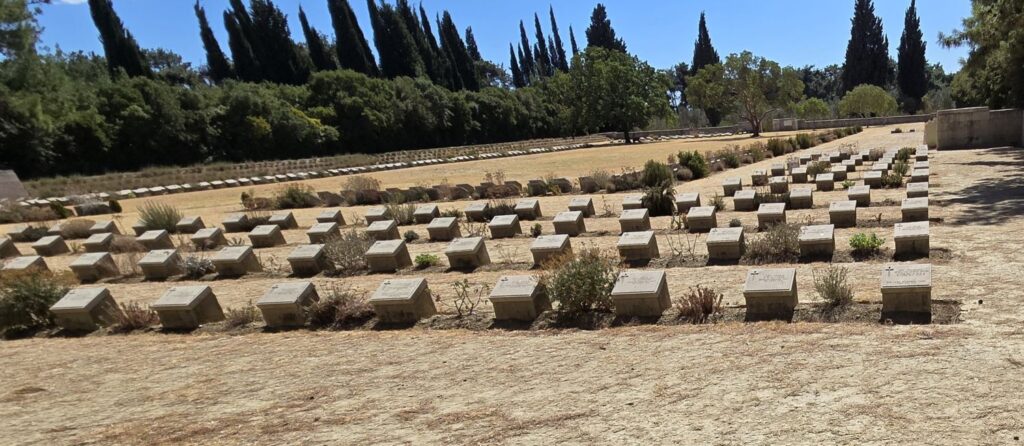
Our time here is a grand ramble on wise ground – I feel the significance of the ground beneath our feet – a recurrent presence of this earth’s hallowed ground.

Shrapnel Valley
We start our climb upwards from Shrapnel Valley Cemetery upwards to Plugge’s Plateau.
P. Ferguson image, September 2025.

Day 8 (22 September 2025): To Home

I have worked through my “of the time” digital notes and images, picking out the memories that add to my expression this last while. Our odyssey on this true footed campaign and trail is led by Gallipoli military historian and author Peter Hart. We revisit old footsteps of our own and those tracks of elden folks. We find new ground (to us) but familiar to that elden generation who speak again with each step taken.

Bulent and Peter
Our leaders Bulent and Peter on the trail.
P. Ferguson image, September 2025.

All the while at critical points we are informed of the occurrences in these very spots. Of great assistance to us all is Bulent our Turkish guide who adds the local accent to Peter’s summations. A tag team of historical interpretation that includes the voices of the campaigners here and images from the time. All of us on this wander have something to add perhaps a quote to read, a paragraph or two, stories from their hometown veteran or regiment. Remember to listen…the voices are varied the stories speak to the time.

Visitors at Helles Memorial.
Father and son visitors at Helles Memorial. From one generation to another.
P. Ferguson image, September 2025.

I concentrate on each step high, low, steep or shallow. It can be easy to tumble here especially walking through treed areas across branches lying in tangles. From bankside to dry stream and back, rock step or ground, solid or loose, inclines, declines these steps of varying heights can with our excitement break our focus. A bit of imbalance and seemingly in step printed slow motion down to the sacred ground.

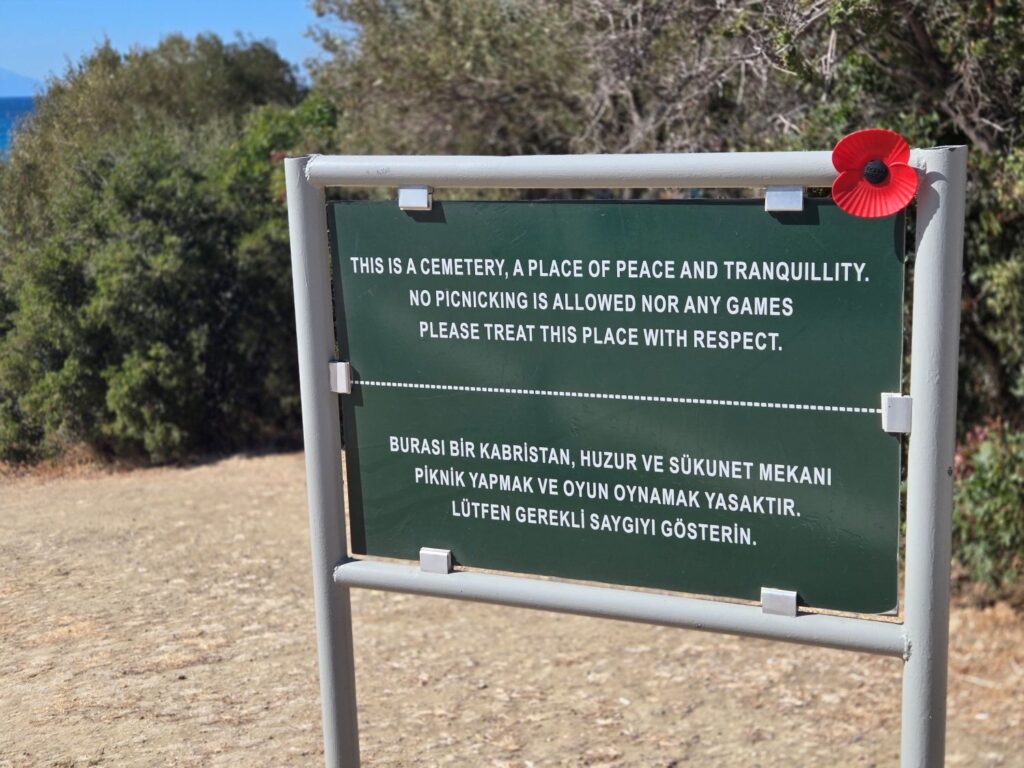
Peace and tranquility
Place of peace and tranquility.
P. Ferguson image, September 2025.

Being mindful all the while of soldier stories, family stories that survive as legend, myth and truth, operational histories, remembrance, songs and poets. Bringing it together is my attempt to help others become interested. These writings are a blend of all connections…they place you on the ground and set the tone for your walking steps at these sites in the future.

Be well…I have made it through, to trek and write another day…

EPIGRAPH

I HEAR THE VOICE THAT CALLS ME HOME
Able Seaman James Allan McWalter
Anson Battalion, Royal Naval Division
Redoubt Cemetery, Helles
4 June 1915
Age 20

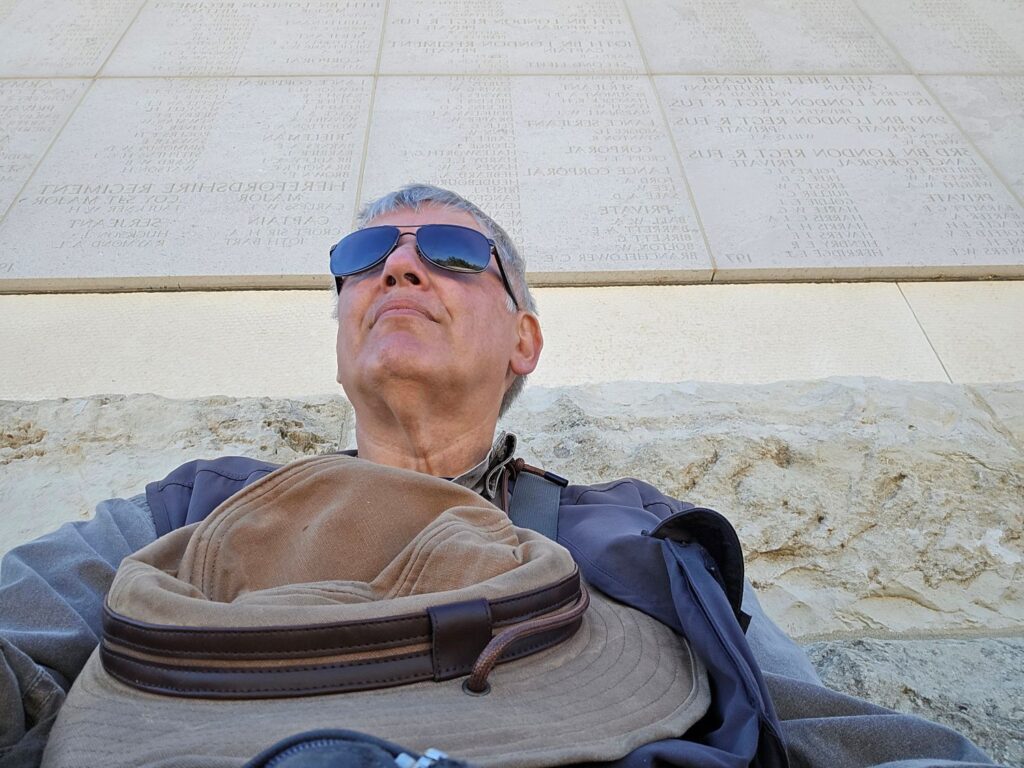
Author at Helles Memorial.
The author rests at the Helles Memorial. A time to reflect.
P. Ferguson image, September 2025.

From notes written 22 September 2025

—END OF SPOOL—

We Can All Use the Light

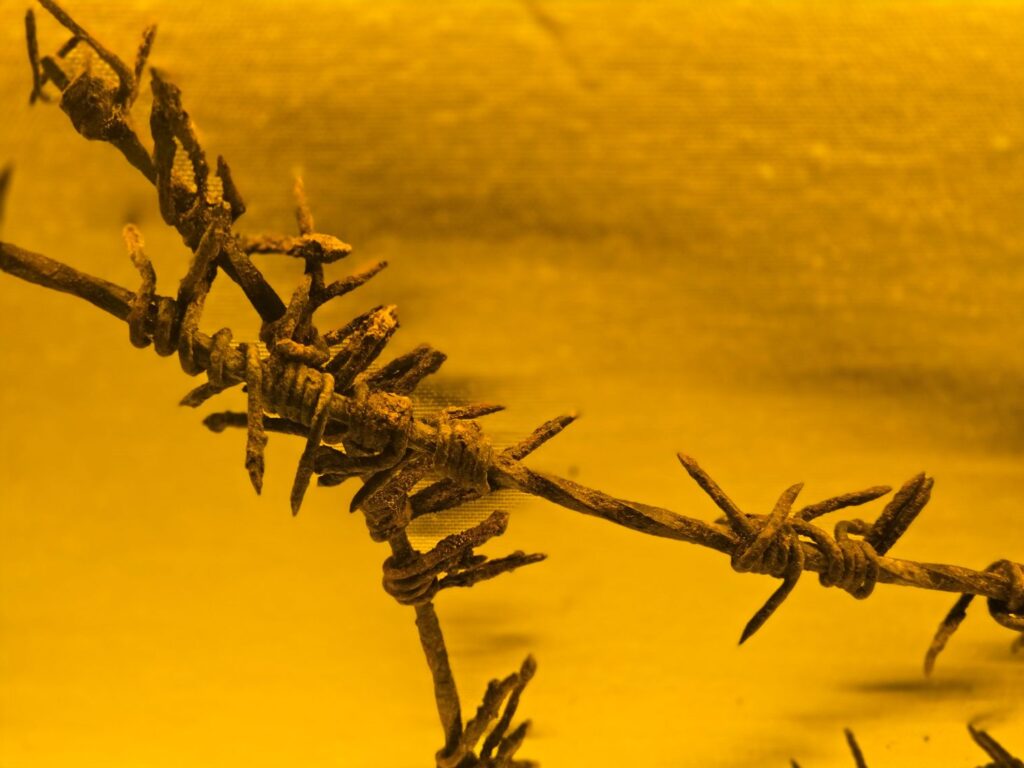
Barbed wire in yellow light.
Barbed wire (the hurt) amplified by golden light. Military Marine Museum, Çanakkale.
P. Ferguson image, September 2025.

Epigraph

The wound is where the light enters you.

Rumi (1207-1273)

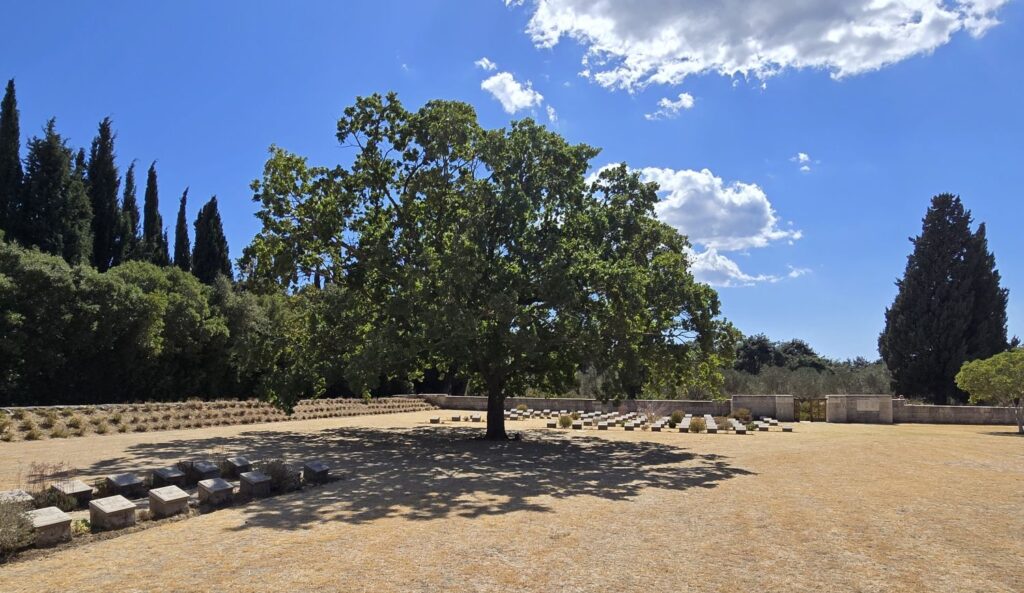
Cemetery at Kumkale.
Gravestones at Kumkale Cemetery, Çanakkale. Near to the French landing.
P. Ferguson image, September 2025.

Day Seven (21 September): Kumkale and Troy

Suitably post-breakfast fortified at our morning café, our troop embarks upon the tour’s mini-bus with its arrival off the Ecabat ferry. Today a new destination, remaining on the Anatolian to Kumkale where the Ottomans and French met in conflict 25-27 April 1915. The afternoon a return to the familiar – Troy where new spaces provide these eyes a fortuitous chance encounter; a symbolic representation of my ever-present thoughts of conflict.

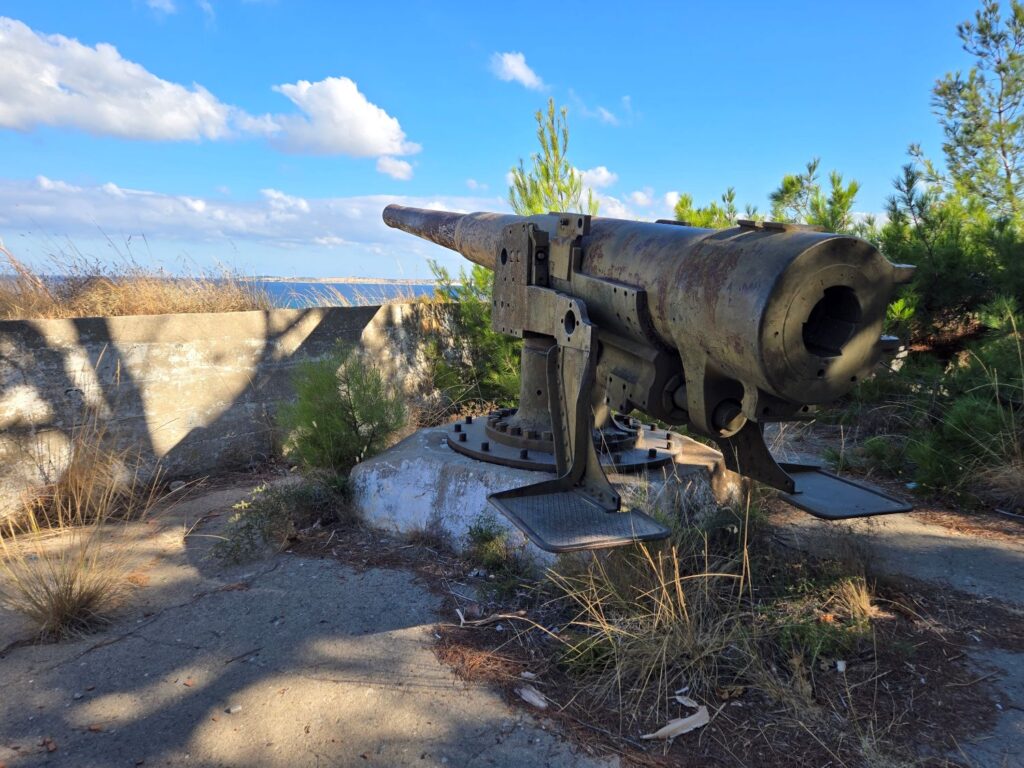
Gun of Dardanos Battery.
Defending the Dardanelles. Heavy gun at Dardanos Battery near Kumkale.
P. Ferguson image, September 2025.

Our wheels roll through areas of wildfire fresh in its destructive path. Blackness against dry ground, buildings and surviving shrubbery. I yearn again for a footed wander across these vistas to seek new views. But soon a return to the troop as the notes of our tour’s anthem begin to play. The bus slows. We have arrived at the Ottoman cemetery where the 1915 French diversion is explained. Again, not all goes well for the allies. Peter repeats the objectives of the first three days…day one Achi Baba, day two, oh dear my recall faded but with inquisition Sari Bahr and day three tea and tarts in Constantinople. None of these objectives achieved.

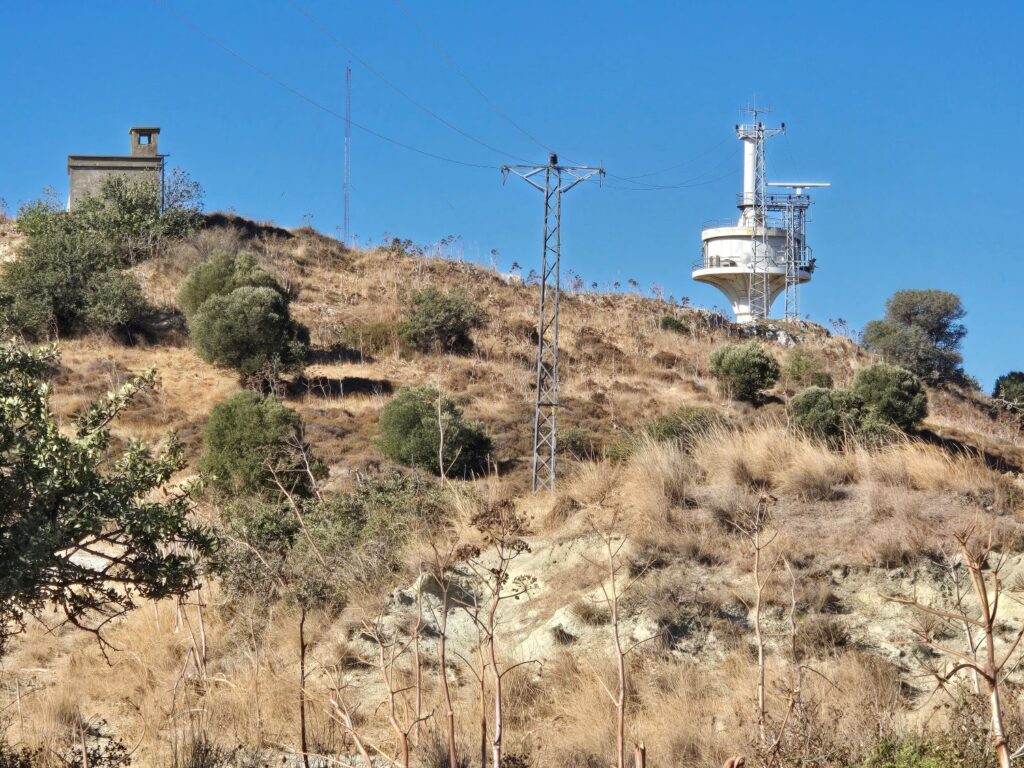
Radio direction finder within the Dardanos Battery.
P. Ferguson image, September 2025.

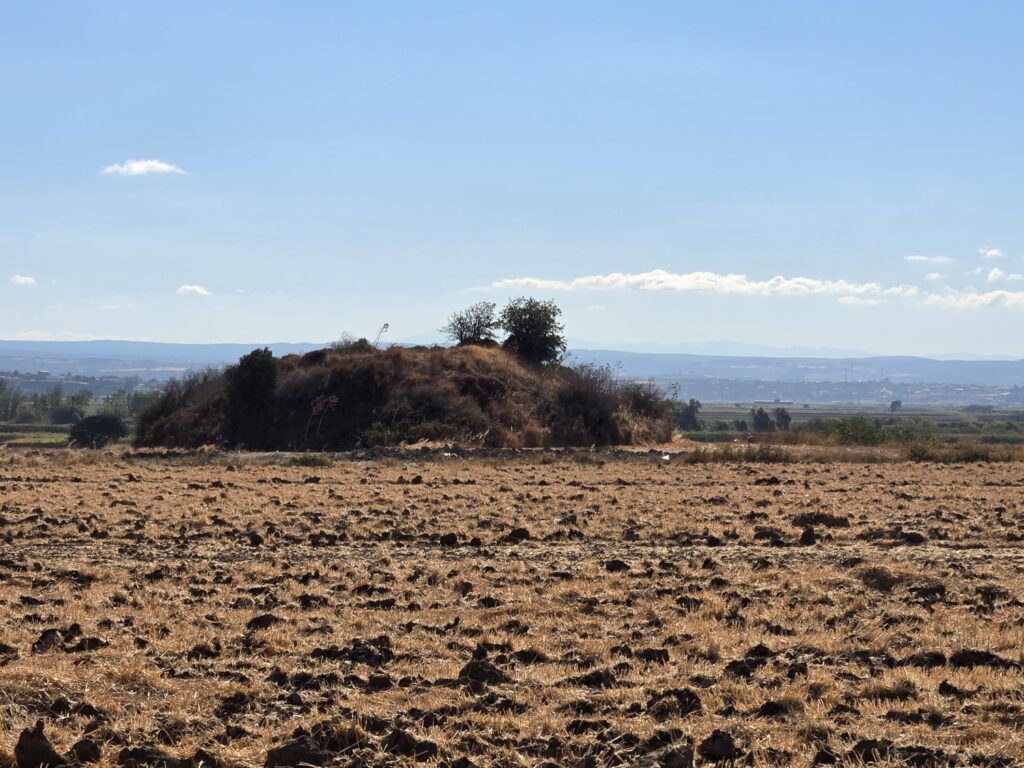
Afterwards we walk stone cobbles towards Achilles. The wind howls through the trees as we proceed to gun batteries. Originals and props for film reside here as does a radio direction finder ideal as a potential set for a 007 antagonist’s lair. We continue to walk. After watching from afar we catch up with the others – we stand, as Alexander the Great once did, at Beşiktepe before a bronze age burial mound, a tumulus where Achilles is said to be buried (c. 1184 BCE). Others make the ascent, but I am content to stand at its base, the angle too steep to climb. That we too pilgrims travel for events of the Great War, Alexander ventured here 334 BCE (Before Common Era).

Bronze age burial mound.
The bronze age burial mound possibly of Achilles.
P. Ferguson image, September 2025.

At Troy we wander the wood trackways stopping at each excavation panel. The archaeological record that is Troy is a must see – for those with strong interests in this site, this is a lifetime destination. Our walkabout ends with the ubiquitous gift shop visit where patinated owls with golden highlights call from glass cabinets. None come home this day.

Patinated owls.
The patinated owls of Troy.
P. Ferguson image, September 2025.

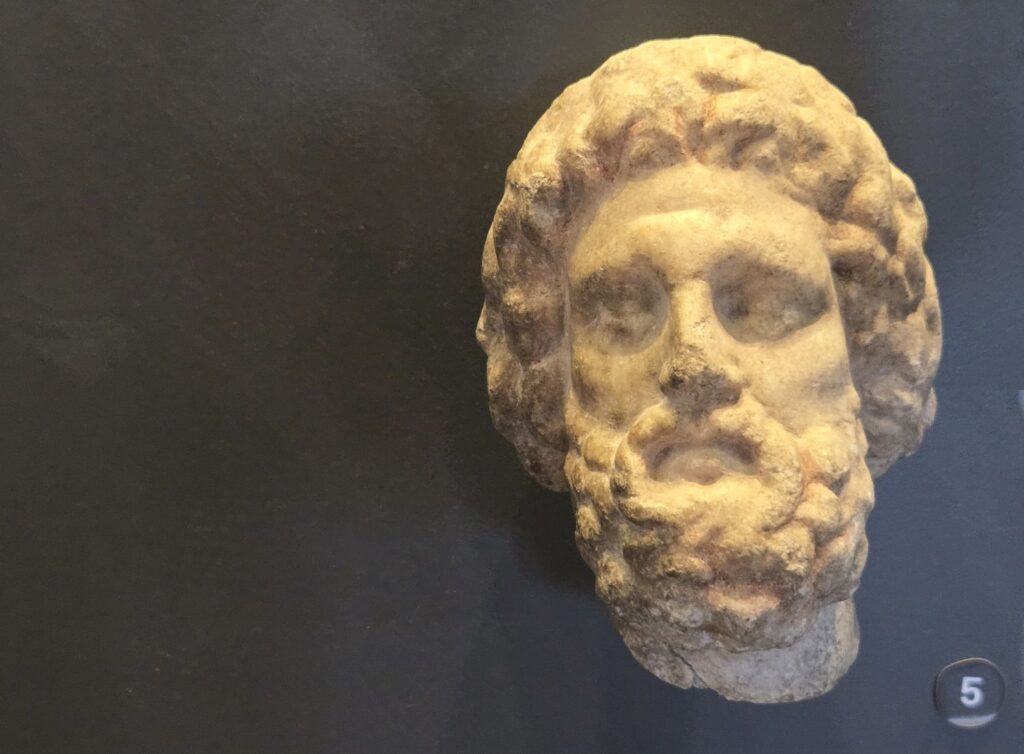
It is at the new museum (Troya Müzesi), Tevfikiye, Turkey opened in October 2018 that I find the epigraph to our journey here. Amidst the broken and whole pieces that once were Troya – one fragment, one face – Asklepios (God of Healing). I remember to myself (we should all remember) not all wounds are visible. As I look upon the face of Asklepios (son of Apollo – God of Light) I appreciate we can all use healing. We can all use the light.

Asklepios. God of Healing.
Asklepios. Fortuitous chance encounter. Troya Müzesi.
P. Ferguson image, September 2025.

From notes written 21 September 2025

—SNIP—

Yonder Toward the Dardanelles

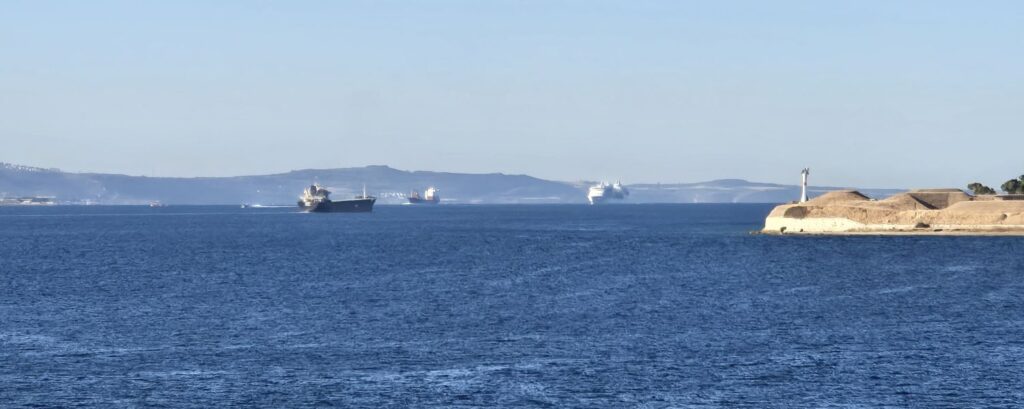
Shipping on the Dardanelles.
Dardanelles shipping on the current and at dock.
P. Ferguson image, September 2025.

Introduction

I stood on the deck of a troopship
At the Gate of the Dardanelles,
Midst the thunder of warships’ cannon
And the bursting of giant shells

G. Brownell, The Call from the Dardanelles
Published in The Referee, 6 October 1915

Suvla Bay.
Suvla Bay where the Allies landed nightfall 6 August 1915.
P. Ferguson image, September 2025.

Day Six (20 September): Suvla

As time nears to our departure another ferry arrives and satirical discussion immediately ensues about the possibility of being rammed amidst various references to well-known but cliche film quotes. The ferry pivots on a dime or more likely a plastic lid floating on the water. The on/off procedures are perfection with those well versed in the ways of our local crossing. Efficiency, both in unloading and loading, some at the same time and when full – off to the other side once again. Atop our water transport I repeatedly rise to photograph the mercantile fleet making its way to the sea. I appreciate painted colour against the natural landscape and deep blue of the passage.

Dardanelles vessel heading north.
The deep blue. Dardanelles vessel heading towards the Sea of Marmara.
P. Ferguson image, September 2026.

The shades of the water’s deep blue harmonizes with the gentle ripples. Enough to make the contours assured of highlights and shadows. Reds and whites stand out against layers of centuries old merchant fleets. With the green but dry Gallipoli Peninsula in the background another freighter compass point moves along. I turn to thinking of Conrad’s Lord Jim and the Patna. Serendipitously how chance reminders (neural signals) allow us to connect random thoughts. Our crossing may be slow today as the floating commerce takes precedence, I take the opportunity writing reminders of neural signals to voyages upon the seas.

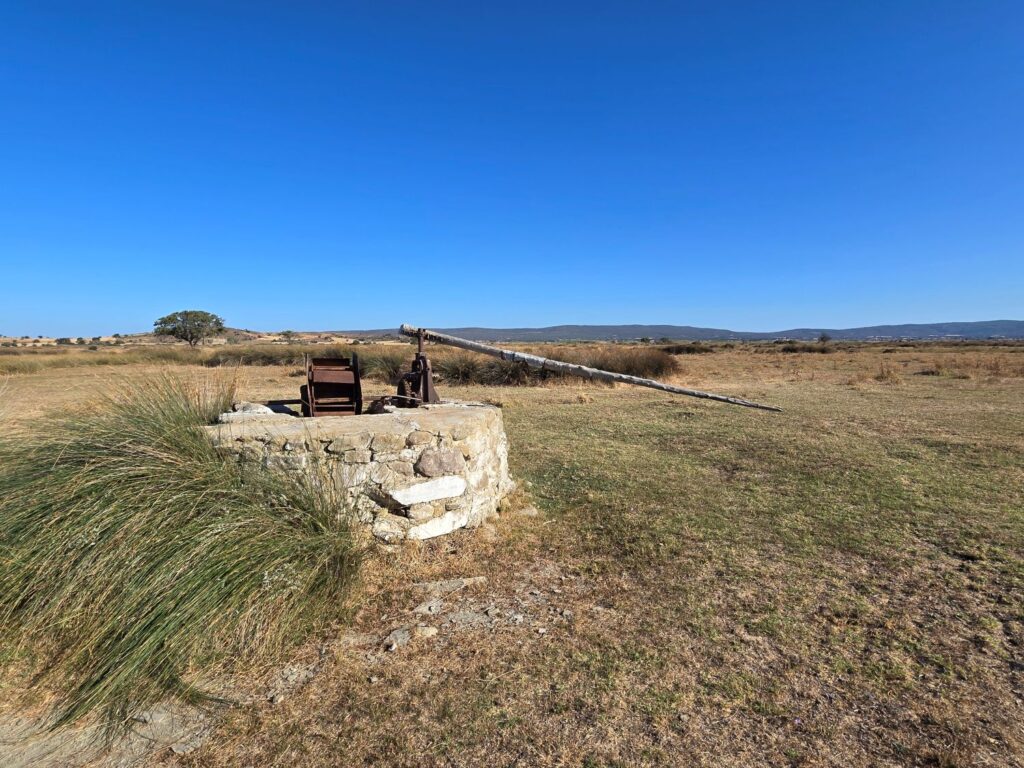
The well.
The well. Failure to provide a shout leads one traveler to drawing water.
P. Ferguson image, September 2025.

Upon the other side we learn of failure to pay for a round (in Australia and New Zealand – think ANZAC – a round is known as Shout/Shouting) has resulted in one of our adventurers assigned with the task of drawing water near Green Hill and Chocolate Hill. In close pursuit is a driver chasing our laborer in circles. Amidst the laughter one thinks of Arnold as Conan. Methinks there will be additional shouts in the evening.

The Lala Baba trail.
Upon this place we tread. Our trail up Lala Baba Hill.
P. Ferguson image, September 2025.

Today at Lala Baba Hill (200 feet high) we learn about the Yorkshire Regiment (6th Green Howards) who are largely coal miners from Durham. Instructed not to use ammunition in the 7 August 1915 attack the fight is with the bayonet and hand to hand combat. The element of surprise lost due to a flare. Three-quarters of the regiment becoming casualties. After two hours there are only fragments of the 6th remaining. Tough coal miners downed by continual hurt upon this place we tread. Amongst their losses Lieutenant Colonel Henry Edward Chapman killed whilst leading the attack to the summit (and here…here we stand). Chapman is buried at AZMAK Cemetery, Suvla.

War Graves headstone H.E. Chapman.
Lieutenant Colonel H.E. Chapman marker, AZMAK Cemetery.
P. Ferguson image, September 2025.

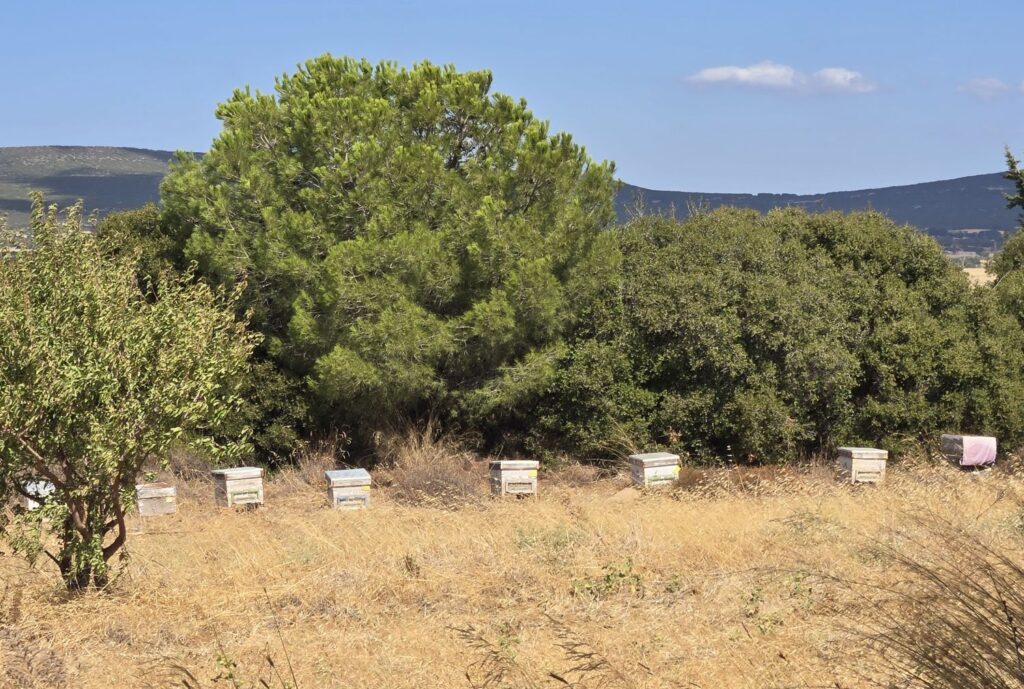
Our journey continues. At our next site I watch green feathered birds dart amongst the trees at Chocolate Hill. We meet with the property owner who takes us to a previously buried Turkish projectile, with fuse and shrapnel balls. After this viewing of rusted metal, attention is turned to the nectar of bees as jars of honey are purchased for travel to tables in the UK. Hives and high explosives – nectar and hurt from the same fields.

Honeybee hives.
Eat honey, my son, for it is good. (Proverbs).
P. Ferguson image, September 2025.

The day continues with the words of Homeland reminding us of the harshness that was once here. Sadly, I am unable to find this voice this day…perhaps it will be heard again to these ears? With thoughts of all this storied day we arrive at Hill 10 Cemetery where I photograph gravestones of Newfoundlanders and so too the Hook Brothers, Duncan and Robin, 9th Battalion Lancashire Fusiliers resting side by side. Their story was known to me…and now there in another, Henry Edward Chapman far, far away across the sea.

Imperial War Museum. Lives of the First World War. E.H. Chapman.

And now today (10 January 2026) with time at home in the comfort of an oversized chair I imagine my Dardanelles ships of colour making their way upon the dueling currents. I think of 1899-1900 Conrad but find another while in search of quotes about the Dardanelles…a 1860 passage not heard to me before…a new serendipitous chance reminder that will return time and time again.

Dardanelles
Théodore Aubanel
French Provençal poet

In the still hours when I sit dreaming
Often and often I voyage in seeming;
And sad is the heart I bear with me,
Far, far away across the sea
Yonder toward the Dardanelles
I follow the vessels disappearing,

Vessels of the Dardanelles.
Dardanelles merchant ships.
P. Ferguson image, September 2026.

From notes written 20 September 2025
—SNIP—

Alinteri Words of the Day

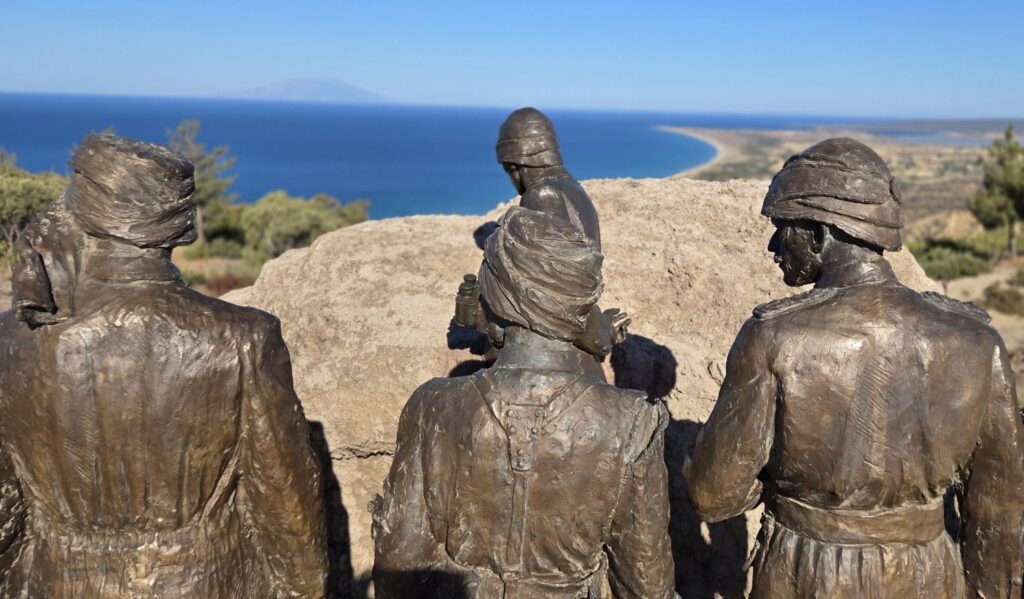
Soldiers in bronze
Soldiers in bronze watch from the high ground.
P Ferguson image, September 2025.

Day Five (19 September): ANZAC II

Minor issues this morning but enough to throw me off my mark. Hopefully catch up will round itself out shortly. It is enough that this creature of habit’s morning routine has had his trail disturbed. Once sorted I feel hurried but resolved. Soon I am at breakfast circling about the honey and bread, cereal, raisins and hot food. Afterwards we advance to the café nearest to our embarkation point. The morning, like the strait and self, has become calm…one must remember…minor issues.

Cars and passengers on the ferry.
Vehicles and passengers prepare to disembark for the Gallipoli Peninsula.
P. Ferguson image, September 2025.

Again our team climbs to the top of the ferry for our crossing to the Gallipoli Peninsula. Two trips a day, there and back again, and how I do enjoy the crossing in these open-seating boats. I have time to think, to start the new words of the day. My mobile is a constant tool – the Notes app receiving a workout each day as I gather thoughts wherever I can. These initial impressions will be added too. More writing, more rumination to follow.

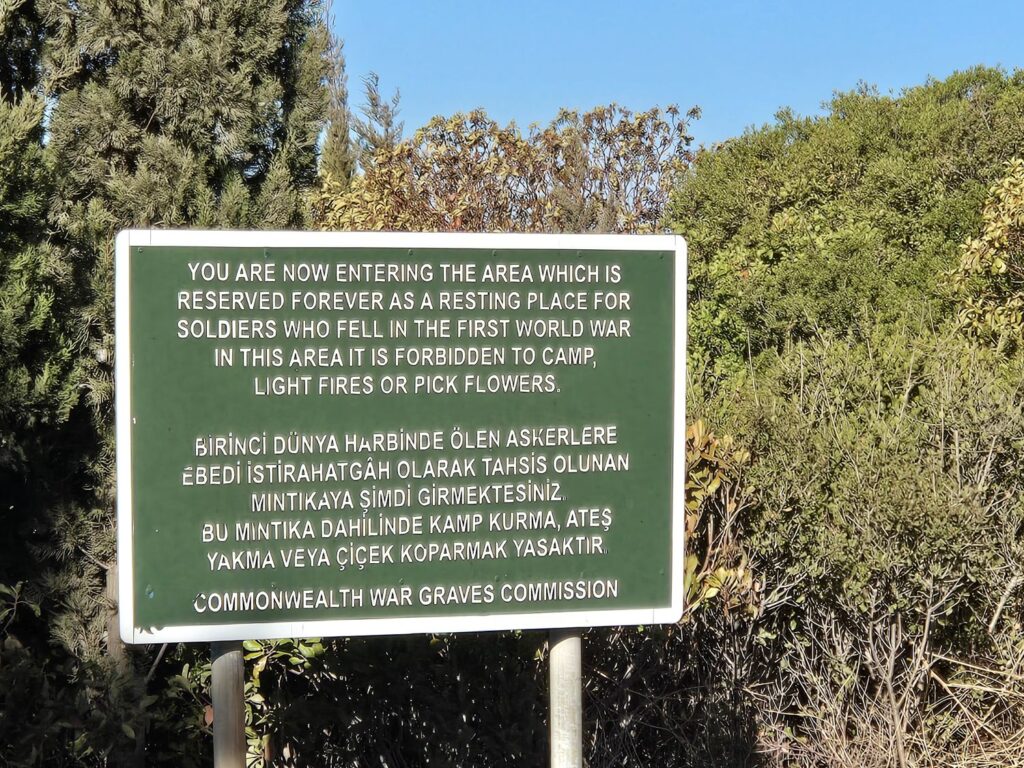
A reminder of where we enter...
A reminder to us all of this land …of what went before.
P. Ferguson image, September 2025.

I believed earlier this may be my last visit here, but I think not. Why do we come back to these places? There are daily challenges, I have challenges – at times with every step. But I return because of what went before. Knowing, feeling this ground, these surroundings, sun, water, earth and sky – the people whose experience was this ground and turning this to my experience for them…for others.

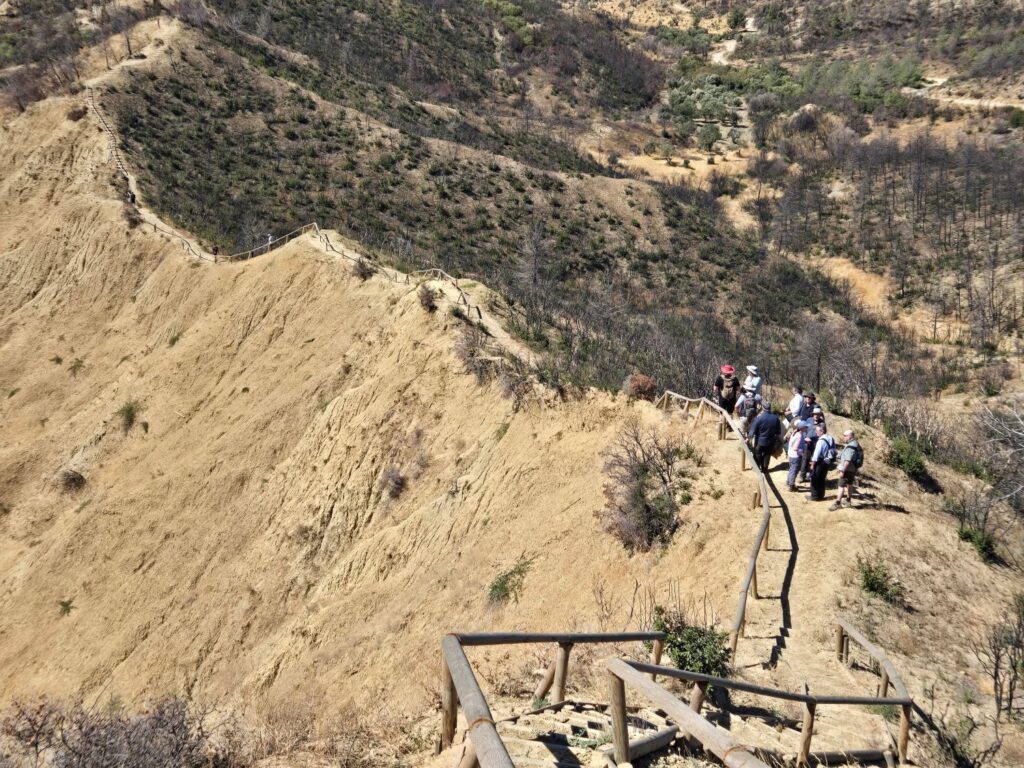
We see more people today visiting relatively open sites. The benefit of this style of operational history tour is we go up and we go down the roads and trails less traveled. I appreciate those who visit here whether from cruise ships, buses or on their own. They have at least shown interest. What connects these visitors to these grounds (?) – to walk these earlier steps, to feel this ground, to stumble to fall, to feel the heat, the salt, the challenge of the climb…

The rugged trail
The burnt and dried landscape of Gallipoli.
P. Ferguson image, September 2025.

It’s a four water bottle walk down a slope covered with debris and stone. Burnt branches litter the ground and in the near distance the sound of chainsaws and falling timber dry crackles its way to the earthen deck. Locals must wonder why we came this way as blackened hands wonder where to wash. The bosks* and holts** require fleet of foot and the free-spirited whip-like branches find their way across your person attempting to thwart your step, to challenge your balance, stinging when their twitch finds bare skin.

Rhododendron Ridge
Rhododendron Ridge.
P. Ferguson image, September 2025.

The climb down and up Rhododendron Ridge, part of the Sari Bair range is much kinder than 2012. The peaks here are 200 to 300 meters high or for us old school types 650 to 980 feet high. And to think soldiers climbed in between these trails and upwards whilst under fire! Aged steps of varying low and deep rises have been replaced with some kindness, albeit occasionally with a reach of the foot. Former railings made of branches have, as well, been replaced with a finer version of sturdy and do not wobble nearly as they did before. It is a grand walk to the water and an event that pushes me, like Gully Ravine to a return visit. With our journey’s end we board our bus to lunch at Hill 60 and stop at the Sphinx where we have time to become familiar with this landmark formation overlooking ANZAC.

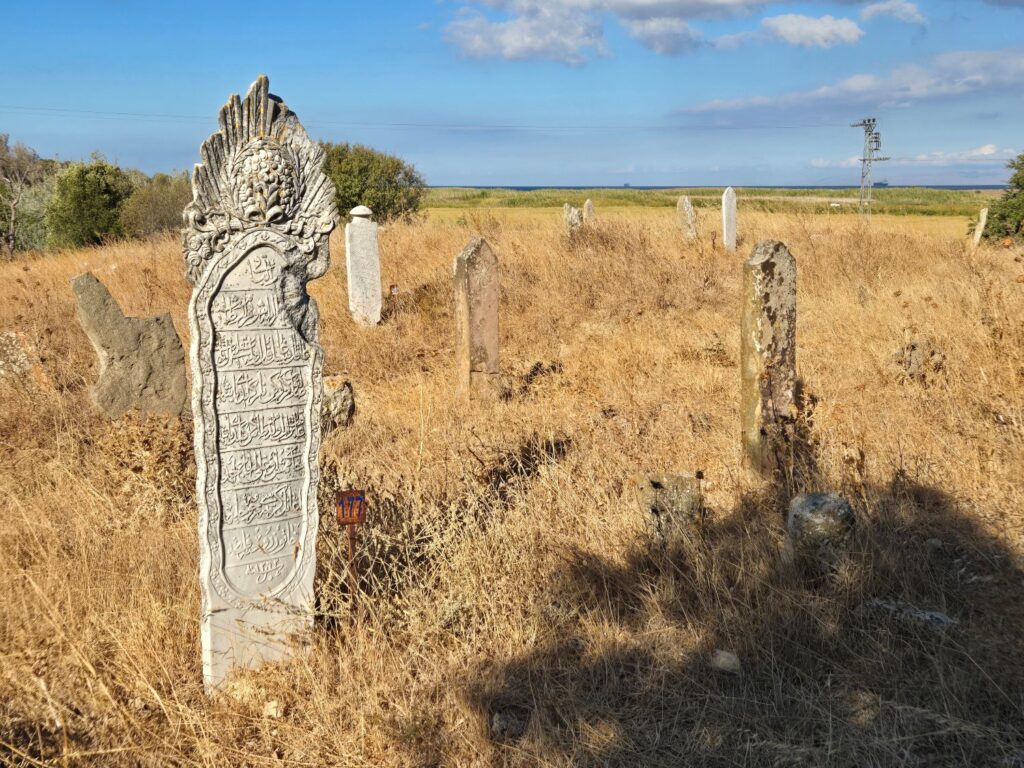
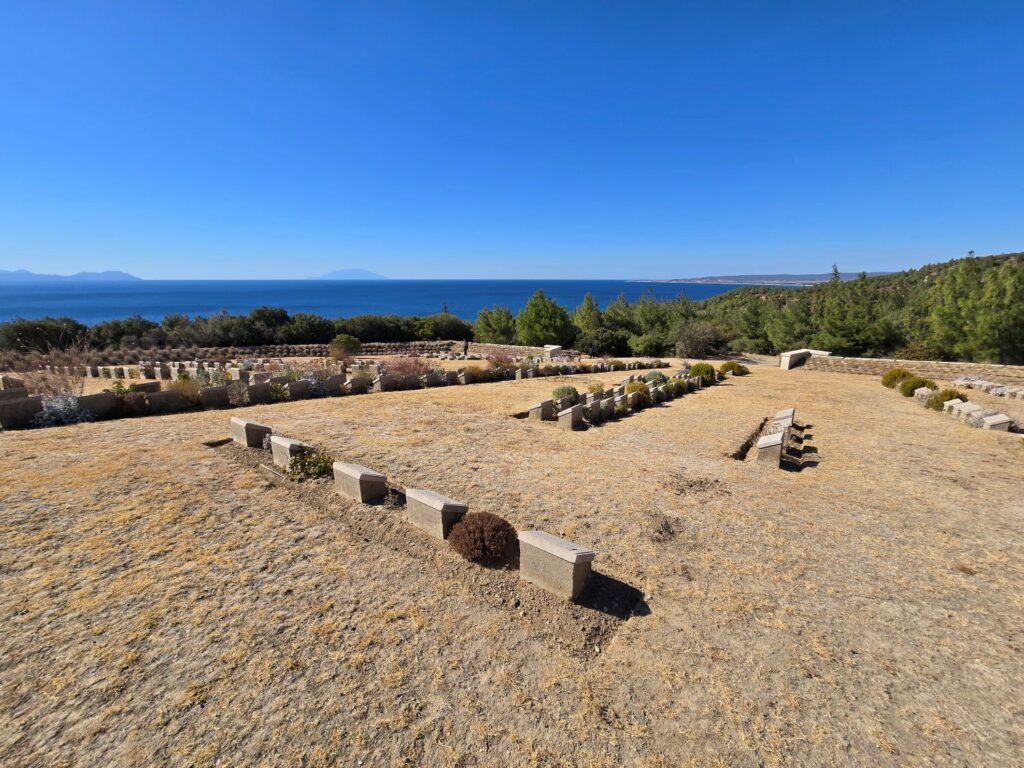
Shell Green Cemetery.
Shell Green Cemetery, cricket was played here. Howzat…Jaffa.
P. Ferguson image, September 2025.

Another walk follows uphill to Shell Green Cemetery where a diversionary cricket match was played on the green by the 1st Light Horse Brigade on the 17 December 1915. The tactical innings a ruse, a deception to conceal Allied preparations for the evacuation of the ANZAC and Suvla Bay sectors. With thoughts of batting and centuries (100 runs), bouncers and googlies I return whence I came down the graveled road, bringing an end to the historic portion of the day…and with each step I watch as the sun stipples across the water on the horizon.

Return from Shell Green Cemetery.
The return from Shell Green Cemetery.
P. Ferguson image, September 2025.

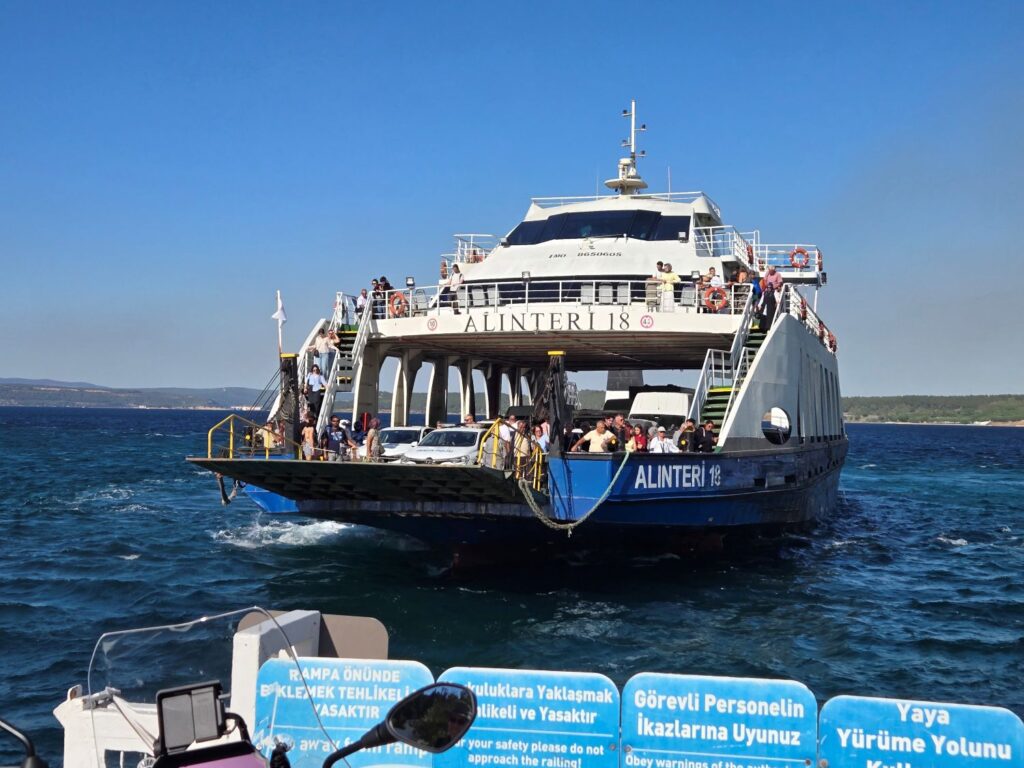
Our bus attempts to reach an early Çanakkale ferry, but our boat has just departed. No hurry, there is more time to watch from this bank. I watch side to side observing life moving within the winds of today. It is a fine contrast to the past events we experience with our wanderings here. As the Alinteri*** 18 docks, I return to the present requirements. It has been a fine day of great effort and achievement. People and cars disembark (and load) at the same time. The vessel waits until full – not to a set schedule (it would seem). Before we depart the nearby minaret provides its audible devotional to all. Heads turn towards the direction of the call to prayer heralded from the tower and as we depart, I wonder what those amongst hear within its yearning voice?

Our ferry the Alinteri.
Our return ferry the Alinteri 18 prepares to dock.
P. Ferguson image, September 2025.

* Bosk: thicket of bushes, a small wood.

** Holt: Old English. A small wood, wooded hill, grove of trees.

***Alinteri: Turkish meaning “sweat of the brow”. Hard work, labor or great effort. Used to emphasize that something was achieved through honest hard work.

From notes written 19 September 2025

—SNIP—

Can You Hear the Music

Introduction

Istanbul not Constantinople. We are barely off the ferry and onto the bus…the preliminaries beginning as I request 30 seconds notice before we join in this day’s, same as each day, bus-song. Great fun and now (having had 30 seconds) recorded for all time, a rousing choral group only too pleased to belt out the tune, ably led by the PHBT* logistics team. Though prior to this trip the song amused me it is now a standout, a memory for all time. The tune sets the tone for our day…brings the team together…all are smiling, whilst chattering about last evening’s wind tunnel refreshments. Our 50-minute drive to Gully Ravine continues.

Day Four (18 September): Helles 2

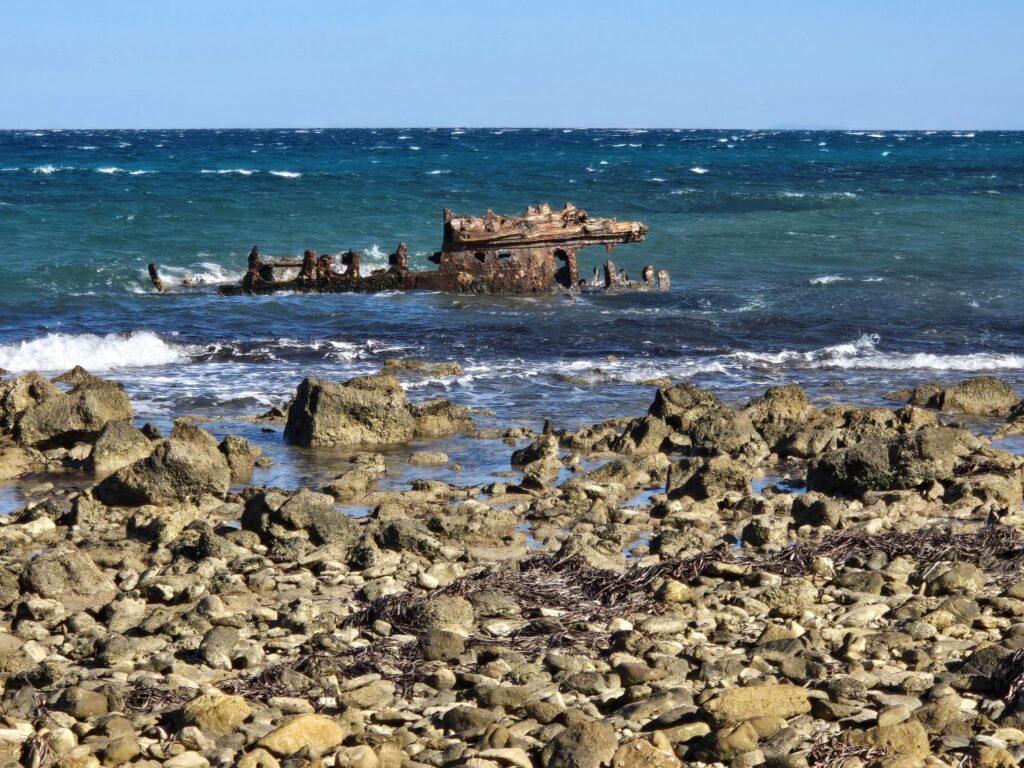
Lighter at Gully Beach,
Shipwrecked lighter at Gully Beach.
P. Ferguson image, September 2025.

We stop at X beach and walk part way down the slope stopping before we are on the landing. It is a brief visit to learn what happened here but soon we move on to Gully Beach (Y2) where another vessel awaits us lying in state beached. Its metal skeleton becoming increasingly a relic of layered, shredded rust. One day the sea shall have the boat shard as the waves continue with their wake. Nearby the bones of men.

Water bottles.
Standing full and crumpled water bottles.
P. Ferguson image, September 2025.

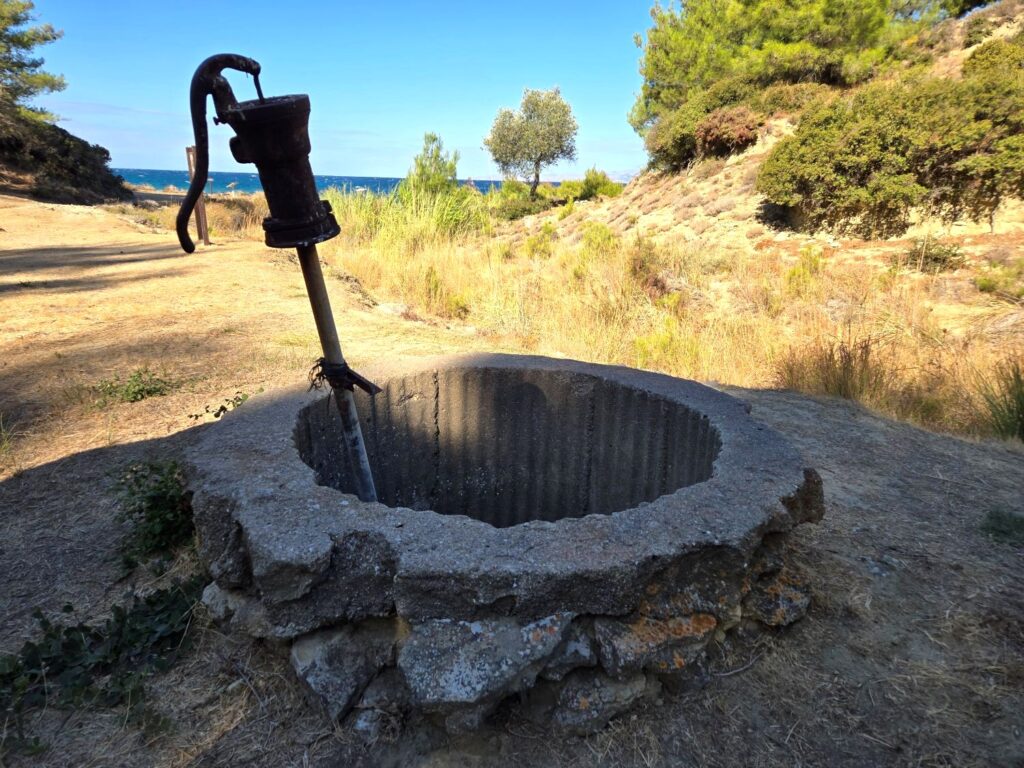
We walk towards a well…likely dug by Joseph Murray, Hood Battalion, Royal Naval Division. Though water lies within its walls we would not drink from it. Best to trust the hydration we carry. Aqua est Vita – Water is Life. A perfect reminder – remember to hydrate…our next walk is three bottles long…and our time here and for all days – the sound of crumpling bottles like the shuffling of cards. Some sounds stand out from the crowd, and this is one for the duration. We move on from the well, card metaphors continue.

Well near Gully Beach.
Water is life. The well near Gully Beach.
P. Ferguson image, September 2025.

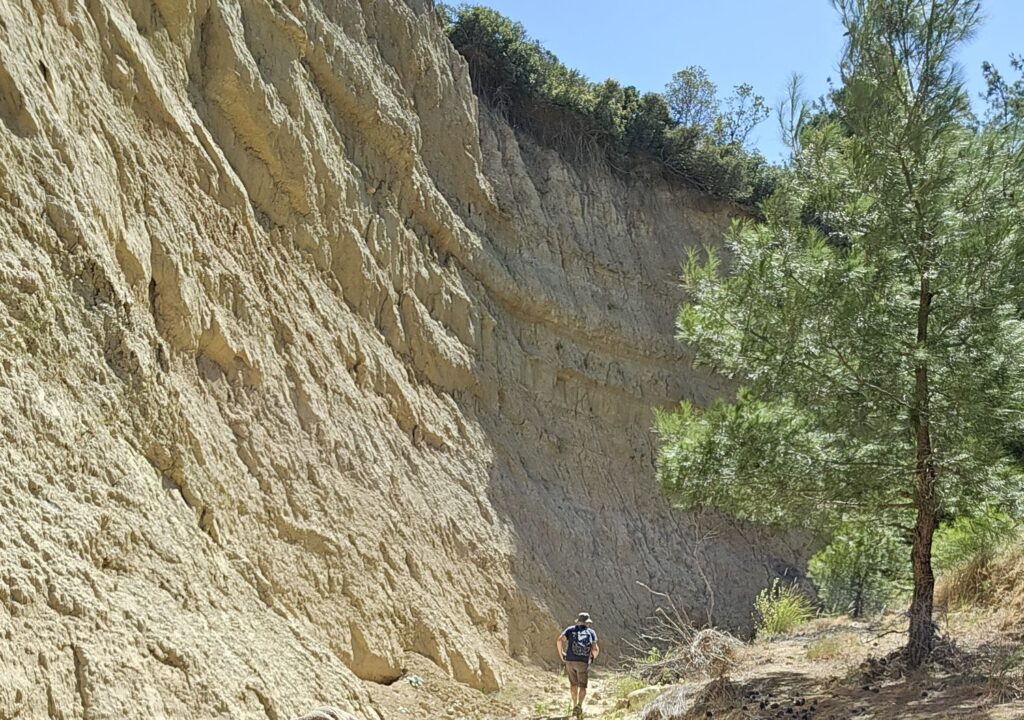
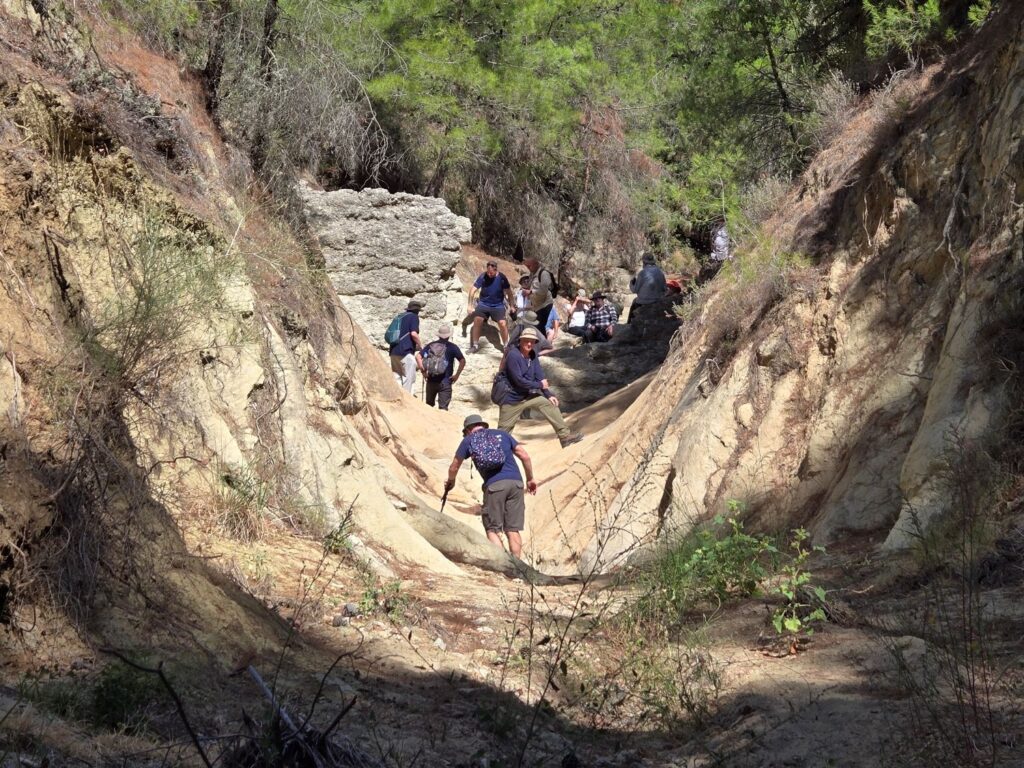
Our wander through the dry ravine goes especially well. In 2012 our group had challenges to navigate…I seem to recall sliding across boulders (or at the least very large rocks or was it compacted earth – probably both) in an attempt to move along the path of least resistance. There seemed to be more obstacles as the water in the ravine dictated our need to bob and weave. One was concerned about falling in – though not deep there would be far too much laughter for the remaining day and for the rest of the trip. Here in 2025, there are a few low-level challenges, and the natural rock wall requires two to help me over, but there is no water. I suspect the 2012 challenges remain – that was May…now in September it is far drier, not very green, and so too with wildfires having taken much in its path…we are able to see more.

Gully Ravine
Walking through a very dry Gully Ravine.
P. Ferguson image, September 2025.

Along the gully’s carved route I again stand and walk in amazement at this natural place that in 1915 saw medical posts within its contours including dressing stations and first aid posts. I imagine as I wander, what silent sounds rebound within these walls…their stories are being told again as we walk through this part of history. Hmmmm 1915…2025…110 years later. We will remember them.

Approaching the rock wall at Gully Ravine.
The team at the natural rock wall of Gully Ravine.
P. Ferguson image, September 2025.

At Nuri Yamut Memorial we sit outside its walls and receive our lunch, meatball sandwiches embedded with chips aka fries, along with bananas, drink and ice cream. While here in Gallipoli each day, time is of its own accord. It takes the time it takes to hike to places, there are always detours in our advance, new finds, new excursions, lunch occurs when we get there. Not as scheduled but always appreciated. As I walk along the wall after re-fueling the call to prayer begins its crest. Indeed most appropriate after all we have seen.

Redoubt Cemetery.
Redoubt Cemetery. West of Krithia.
P. Ferguson image, September 2025.

A visit to Redoubt Cemetery, near Krithia, occurs near to day’s end and brings us to a memorial tree planted in honour of 2nd Lieutenant Eric Duckworth, “B” Company, 6th Battalion, Lancashire Fusiliers, age 19. The tree is the only private memorial on the Gallipoli Peninsula having been planted by his parents James and Mary Duckworth of Dunsterville, Rochdale in 1922. Though Eric Duckworth was never found, he is commemorated on the Helles Memorial, the leafy oak stands with 2,027 Commonwealth servicemen burials and commemorations.

Eric Duckworth memorial treee.
Memorial oak tree planted in memory Eric Duckworth.
P. Ferguson image, September 2025.

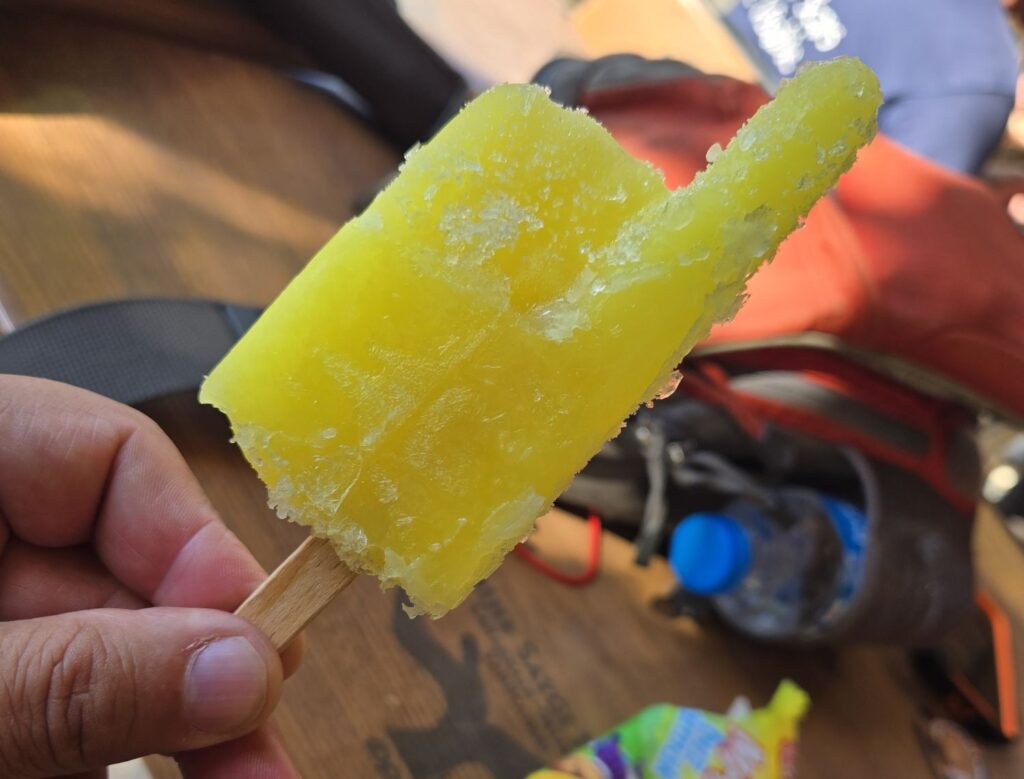
Reminders of loss continue as we add to our day of learning at Achi Baba a site of great devastation, costly and bloody, in these killing fields and gullies. There was an immense loss of life here, fragments of war are found along our travel lines and, at rest in the crux of a tree, the sting of a projectile lies extinguished but haunting. The trauma still remains in these grounds and waters… though we repeatedly remind ourselves to never let this carnage happen again, with our lives of experience, the knowledge of the days we have now… is it too much to contemplate the actions we continue…after our simple pleasures of lemon ices? Aqua Est Vita…Terra Musicam Habet Is Qui Audiunt (the earth has music for those who listen).

Lemon ice.
Lemon ice at Krithia. Time for contemplation. Can you hear the music?
P. Ferguson image, September 2025.

*PHBT (Peter Hart Battlefield Tours)

From notes written 18 September 2025

—SNIP—