Splinters

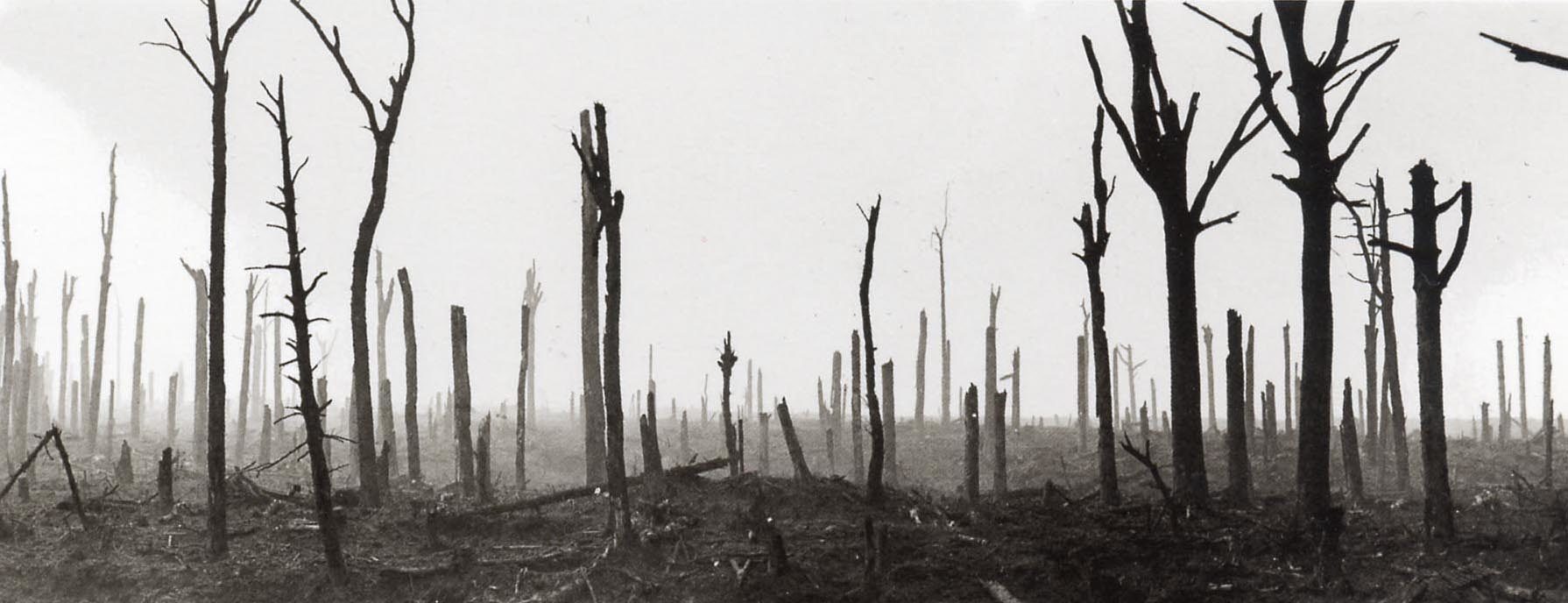
Black and white image of shattered, splintered trees on the western front.  It is desolate...a haze upon the ground. Who is out there?
Splintered trees of the Western Front.

Fragments of Memory

Like inverted stakes in the hearts of France and Flanders, the splintered trees from the fields of battle stand as rooted silhouettes. Their splinters litter the ground on which men once walked, crawled or ran; the belligerent skelfs, large and small, hurling about tearing and ripping the flesh, piercing the souls of men.  Amongst the metal fragments, aimed engineering, gas and shrapnel balls these organic shards of nature took their toll. They, the soldiers, from all the pictures – seem to live in a world of black and white, with gray washes suggesting a continual haze from which men emerge between the trunks. The colour gone, leached from the landscape, drained into the ground where the roots of seemingly dead trees struggle to find a source of regeneration.

And yet with peace, and the passage of time, this bleak terrain that harnessed all participants for the years of the Great War has returned as green fields filled with new life. The shattered remains of Ents, witnesses to the dreary course of men have passed but like the bones of men, their fragments haunt the ground in search of sweet memories instead of the bitterness of war.

Splinters, bits of whole things, fragments of memory, much of it lost to us, but once in a while, captured in a note to mother or another loved one, in the rekindling of the past, or in the telling of a story that has survived. When Tolkien wrote his trilogy, there are reminders of the Great War woven throughout its pages, his time on the Somme, and the acts of men are there for all of us to become immersed. How few today realize that Tolkien’s epic reflects, his Great War, the age of men­­­.

Did you know?

John Ronald Reuel Tolkien served during the Great War with the 11th Battalion Lancashire Fusiliers. He arrived in France in June 1916 and during the Battle of the Somme was a signals officer.  Tolkien saw action at the Battle of Thiepval Ridge and took part in the assault on Schwaben Redoubt. Having suffered from trench foot on numerous occasions he developed trench fever in late October 1916 and returned to England November 8, 1916. The rest of his war was spent on garrison duties and in hospital. Still Tolkien’s experiences on the Somme gave to the world, through the sites he was witness, a trilogy long regarded as epic and classic in nature. Best then to remember his words, “By 1918 all but one of my close friends were dead.”

Previously published Pipes of War website, 29 April 2012

Side by Side

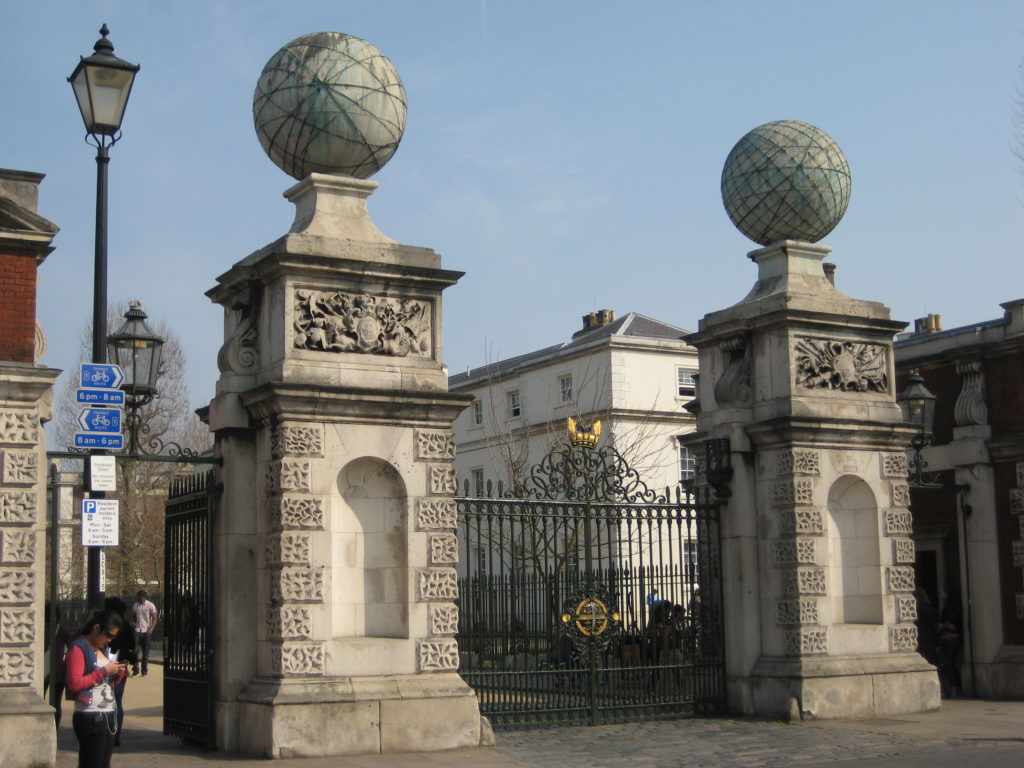
The twin gates at the old Naval college, Greenwich, England. Spheres atop rectangular stone columns. An iron gate in between.
The gates at the old Naval College, Greenwich, England.
P. Ferguson image, March 2011

All things considered this has been a fine day. It has been great wandering about and now sitting in The Old Brewery it is all rather relaxing and even more so when one realizes this brew house has been around since 1831.

It is almost time to start again and I rise up from the table. I move into the Discover Greenwich Visitor’s Centre and move about the exhibits with a watchful eye, casting my gaze all around, as I watch the visitors milling about. My other interests surface as I walk about the room. How has this display been put together? What have they chosen to assemble? How have things been grouped together? How has the text been created? And so it goes on. We have learned much today, and I am pleased with the results.

Together we move into the gift shop, and though I know there is always a shop around the corner in these centres, I like them. You never know what interesting things may be on offer, especially at a site such as this. We find a few things to bring home as gifts and perhaps an item or two for ourselves. Once at the till, we talk to a member of staff and have a fine chat. I was very pleased to learn about the number of films that have chosen this site for their films. Some of these films will be familiar to you and include, The Duchess, Sherlock Holmes, The Golden Compass, Patriot Games, The Wolfman, Young Victoria, Tomb Raider, Four Weddings and a Funeral and of course The Four Feathers. Thanks Abel – and to everyone who makes this site a splendid focus for Greenwich heritage.

Now I think back to A.E.W. Mason’s characters Jack Durrance, Edward Castleton, Tom Willoughby, William Trench and Harry Fevershem. As Rosemary and I walk through the gates and turn to look one last time at the old college (for this visit) I recall Harry and his father, General Fevershem, together again and wonder what the future might bring to Harry and Ethne.

Now that time has brought us to this point, I cannot help but think about Jack Durrance and his voice courtesy of Michael Schiffer’s screenplay. It seems to capture the essence… it reminds me of all those veterans I have spoken with over many years, and of all those who passed through the gates at Greenwich.

You may be lost, but you are not forgotten. For those who have traveled far, to fight in foreign lands, know that the soldier’s greatest comfort is to have his friends close at hand. In the heat of battle, it ceases to be an idea for which we fight. Or a flag. Rather we fight for the man on our left, and we fight for the man on our right. And when armies are scattered and the empires fall away, all that remains is the memory of those precious moments that we spent side by side.

Previously published Pipes of War website, 15 May 2011